Two searches, run the same afternoon against the same register. Botulinum toxin type A returns 58 licences, every one of them filed under a single classification code. Exosome returns zero. Neither result is ambiguous, and neither is a problem with the search. Read side by side they describe something the individual entries cannot: what it looks like when a regulatory framework has fully absorbed a category, and what it looks like when it has not yet begun.
Fifty-eight licences, one classification
The toxin entry is the most orderly this series has encountered. Fifty-eight licences, of which 57 are currently valid and exactly one has lapsed. All 57 are injectables. All 57 are prescription-only. And all 57 sit under [06320], the classification for toxins and toxoids.
That last figure is what makes the entry unusual. Every other ingredient examined here has scattered across classification codes: ascorbic acid across twenty, lidocaine across six, sodium hyaluronate across five, placenta across three. Botulinum toxin uses one. There is no dental variant, no topical filing, no residual category absorbing the leftovers, because there are no leftovers.
The reason is structural rather than administrative. A classification code records what a preparation is filed for, and this molecule is only ever filed for one kind of thing. Where ascorbic acid travels into dental preparations and contrast media as a component, botulinum toxin is never a passenger in someone else's formulation. It is always the product.
The dates are correspondingly tight. The oldest licence is from July 1999, which makes this a young entry by register standards, roughly 37 years newer than the oldest ascorbic acid record and 27 years newer than the oldest placenta injectable. Twenty-one companies hold the 57 valid licences, a moderate field: wider than placenta hydrolysate's single holder, far narrower than ascorbic acid's 120.
The single lapsed licence is worth a sentence of its own, because it is the smallest withdrawal count in the series and stands in sharp contrast to what the same measure showed elsewhere. Ascorbic acid has shed 229 records, roughly a quarter of everything ever licensed under it. Lidocaine has shed 44. Sodium hyaluronate 36. Botulinum toxin has shed one. Part of that is simply age, since a 27-year-old entry has had less time to accumulate retirements than a 64-year-old one, but part of it is the same structural fact that produces the single classification code: a category with one purpose and a narrow field of holders does not churn through formulations the way a commodity ingredient does.
The export marking, which is unusually common here
One figure in this entry stands well outside the pattern of every other ingredient in the series. Of the 57 valid toxin licences, 24 carry an export-only marking. That is 42 percent.
For comparison, placenta extract runs at roughly 12 percent across its two routes, lidocaine at about 24 percent on the non-injectable side and 60 percent on its much smaller injectable side, and ascorbic acid at 16 percent non-injectable and 13 percent injectable. Toxin's 42 percent across a single homogeneous population is the highest concentration of export markings this series has recorded in a category of this size.
The marking itself is a licence condition rather than a quality signal, and what it does and does not imply is set out in what the export-only suffix means on a Korean licence. The short version is that it constrains where a product may be sold rather than describing anything about the product, and it is routinely misread in both directions.
What the concentration establishes, and all it establishes, is that a large share of the Korean toxin licence population exists under conditions tied to export. For a buyer outside Korea that is a directly relevant structural fact, and it is one of the few places where a register statistic maps cleanly onto a cross-border sourcing question rather than requiring three layers of interpretation first.
| Botulinum toxin type A | Exosome | |
|---|---|---|
| Licences returned | 58 (57 valid, 1 lapsed) | 0 |
| Classification codes used | 1, all under [06320] toxins and toxoids | none |
| Supply class | 57 of 57 prescription-only | none |
| Export-only markings | 24 of 57, about 42 percent | none |
| Licence holders | 21 companies | none |
| Oldest licence | 1999-07-13 | none |
Twenty-one holders across 57 licences also means most companies in this field hold more than one, which is a different market shape from the ingredients examined earlier. Placenta extract's 24 injectable licences were spread across 22 companies, almost exactly one each, describing a field of single-product entrants. Toxin holders average closer to three. That difference does not make either field better, but it does change what a licence holder name tells you: in a one-each field the holder identifies the product, while in this one the holder identifies a portfolio.
Zero, and what a zero can and cannot mean
The exosome query returns nothing. As this series has established repeatedly, a zero has to be earned before it can be reported, so the same checks apply here as everywhere: the query ran against an index that returned 58 rows for toxin and 840 for ascorbic acid on the same day, so the mechanism was working.
What that zero establishes is narrow and worth stating exactly. The Korean drug licence register contains no product licensed with exosome as a declared active ingredient. That is a fact about one register.
It is not a statement that exosome products are unapproved, unregulated, prohibited, or improperly sold. Those are different questions answered by different records, and this series has already walked into the same trap once with a dermal filler: a device-classified product returns zero from a drug-register search while being fully recorded elsewhere, which means a zero can indicate a category mismatch rather than an absence. Cosmetic frameworks work the same way and are not searchable through this index at all.
So the honest reading is that the drug framework has not absorbed this category, and the reason is not recoverable from a drug-register query. A newer category may be filed elsewhere, may be in the process of being defined, or may sit under conditions that a public ingredient index does not surface. Choosing among those explanations requires records this search does not reach.
It is also worth separating two things that a zero result blurs together: whether a category exists commercially and whether a particular framework has a place for it. Exosome products are plainly present in the market, which is why the query gets run at all. The absence of drug licences says nothing about that presence; it says the drug framework is not where the answer lives. Those two statements sound similar and lead to opposite conclusions, and conflating them is how a search result gets turned into a suspicion.
What settles a category, and how long it takes
Reading the two entries against the others in this series produces a rough sequence, and it is worth setting out because it explains why different ingredients behave so differently under the same kind of query.
A molecule enters the pharmacopoeia for one purpose and acquires a filing. If it proves broadly useful as a component, it spreads into other formulations and its classification scatters, which is what six decades did to ascorbic acid and four decades to lidocaine. If it remains a product in its own right with one purpose, the classification stays single, which is what has happened to botulinum toxin across 27 years. And if a category is new enough that the framework has not yet decided how to treat it, the register simply has nothing, which is where an exosome query lands today.
None of those three states is better than the others. A scattered entry is not disorder, a single-code entry is not superiority, and a zero is not failure. They are positions in a process, and the position tells you what kind of verification is available rather than what kind of product you are holding.
The practical translation is direct. For toxin, the register can independently confirm supply class, classification, licence holder and export conditions for a specific product, which is a lot. For exosome, it can confirm none of those, so verification has to come from manufacturer documentation and from whichever framework the finished article actually falls under. Both are workable; they are just not the same work, and treating them as interchangeable is how a buyer ends up with false confidence in one direction or unfounded suspicion in the other.
One caution about the sequence just described: it is a pattern observed across six ingredients, not a law, and it is not predictive. Nothing about a category being new determines that it will eventually acquire a drug filing, and nothing about a scattered entry means it was once concentrated. The sequence is a way of reading what a result means today, and a seventh ingredient could break it as readily as lidocaine broke the route-predicts-supply-class rule that placenta and polynucleotide had made look universal.
Running these two queries yourself
These are the same five checks the series has been accumulating, applied to the two extreme cases where results are either maximally orderly or entirely absent.
- Earn the zero before reporting it. Run a query you expect to succeed in the same session. If toxin returns 58 and your target returns nothing, the index is working and the absence is real for that index.
- Count classification codes as a maturity signal, carefully. One code across 57 licences says the category has a single settled purpose. Twenty codes says the molecule became a component in other people's formulations. Neither is a quality judgement.
- Read the export marking as a condition, not a grade. Forty-two percent is a structural fact about this licence population and says nothing about any individual product's standing.
- Never convert a zero into a classification. "Not in the drug register" is the whole claim. Unapproved, unregulated and prohibited are different claims requiring different records.
- Match the register to the framework before searching. Half the confusing zeros in this series came from querying the right ingredient in the wrong record set.
As with every entry in this series, none of it addresses what a preparation does. The register carries no efficacy field, no indication text and no outcome data, and this article makes no claim in that direction about either category.
A closing observation about why these two entries were worth reading together rather than separately. Examined alone, the toxin result looks like a description of toxin and the exosome result looks like an absence of information. Side by side they turn into a description of the register itself: an index whose usefulness varies enormously by category, and which gives its most complete answers exactly where a category has been settled longest. A buyer working only in mature categories will find register verification reliable and conclude it is a general tool. A buyer working at the newer edge will find it silent and may conclude the tool is broken. Both are looking at the same index behaving correctly, and knowing in advance which case you are in is most of what this kind of lookup is good for.
Both categories in KSTATION sourcing
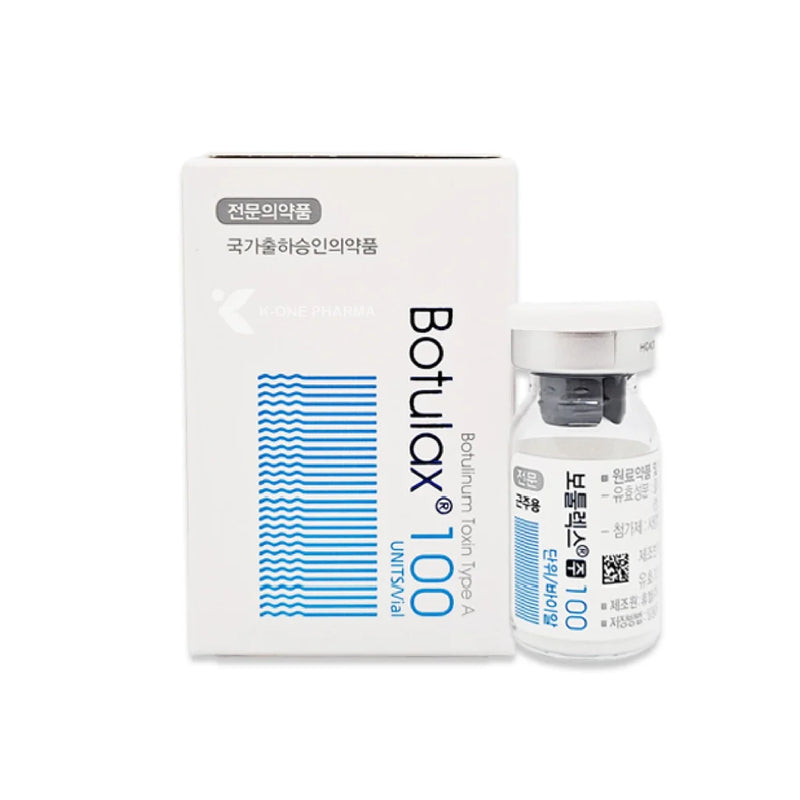
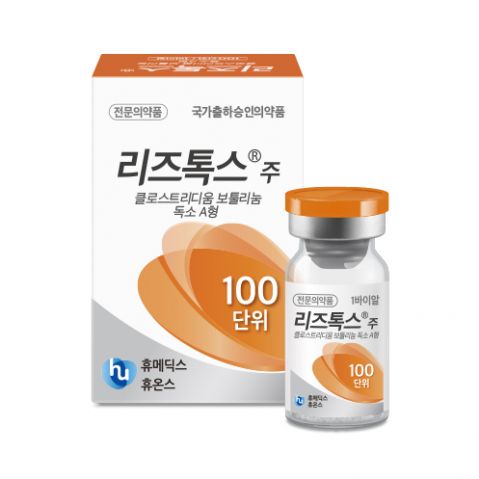
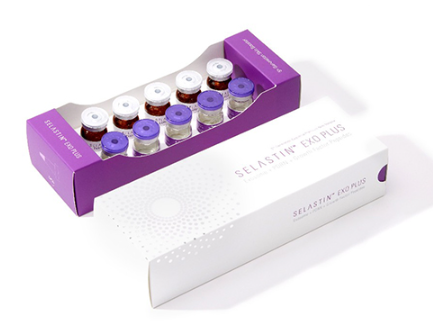
Both sit in the current range and are verified differently because different records exist for them. The toxin range, including BOTULAX 100 Units and LIZTOX 100 Units in the wider botulinum toxins selection, is checked against the drug register for licence holder, supply classification and licence conditions. Exosome products such as SELASTIN EXO PLUS are checked against manufacturer documentation and the framework the finished article falls under, because a drug-register query would return nothing regardless of the product.
In practice that means the two ranges carry different kinds of documentation, and a buyer should expect that rather than read it as inconsistency. A toxin product can be tied to a public licence entry with a holder name and a supply classification. An exosome product is documented at the manufacturer level, which is a different evidence type rather than a weaker one, and asking for the same paperwork from both would produce a confident answer from one and an impossible request for the other.
The method is in the Editorial and Sourcing Policy, and the reason it is framework-first is exactly the asymmetry described above. Recording "not found in the drug register" as though it were a finding about an exosome product would be recording a category mismatch as a defect. All products referenced are supplied for professional use by qualified practitioners.
Frequently asked
How many botulinum toxin products are licensed in Korea?
Fifty-eight licences appear under botulinum toxin type A, of which 57 are currently valid and one has lapsed. All 57 are injectables, all are prescription-only, and all sit under a single classification code. Twenty-one companies hold them, and the oldest dates to July 1999.
What class does Korea file botulinum toxin under?
[06320], the classification for toxins and toxoids, and only that one. This is the only ingredient examined in this series that uses a single classification code across its entire population, which reflects that the molecule is always the product rather than a component of someone else's formulation.
Are exosome products in the Korean drug register?
An ingredient search returns zero licences with exosome as a declared active. That describes the contents of one register and nothing more: it is not a statement that such products are unapproved, unregulated or prohibited, since other frameworks maintain separate records that this index does not reach. The same query session returned 58 toxin licences, so the search mechanism was working.
Why do so many Korean toxin licences carry an export marking?
Twenty-four of the 57 valid licences, about 42 percent, carry one, which is the highest share this series has recorded for a category of this size. The marking is a licence condition governing where a product may be sold rather than a description of the product, and it is frequently misread in both directions.
Does a single classification code mean a category is better regulated?
It means the category has one settled purpose in the filing system, which is a structural observation rather than a quality one. A scattered entry such as ascorbic acid's twenty codes reflects a molecule that became a component across many formulations. Neither pattern says anything about the products themselves.
Sources & references
- Ministry of Food and Drug Safety (MFDS), Korean drug product licence register, ingredient query "Clostridium Botulinum Toxin Type A" (58 licences, 57 valid, all under classification [06320], 24 carrying export-only markings), retrieved 2026-08-24. data.go.kr
- MFDS Korean drug product licence register, ingredient query "Exosome" (zero licences), run in the same session, retrieved 2026-08-24. data.go.kr
- KSTATION, Editorial & Sourcing Policy (framework-first verification; open items recorded rather than inferred where a register does not cover a category). kstations.com
Disclaimer. This article is general educational information and is not medical advice. It describes what two ingredient queries return from the Korean drug licence register and what those results do and do not establish. It makes no claim about what any product does, makes no determination of any product's regulatory status, offers no comparison between brands, and provides no guidance on units, dilution, handling or administration. Products referenced are prescription-only or professional-use articles supplied to qualified practitioners. Regulatory status varies by country and changes over time.