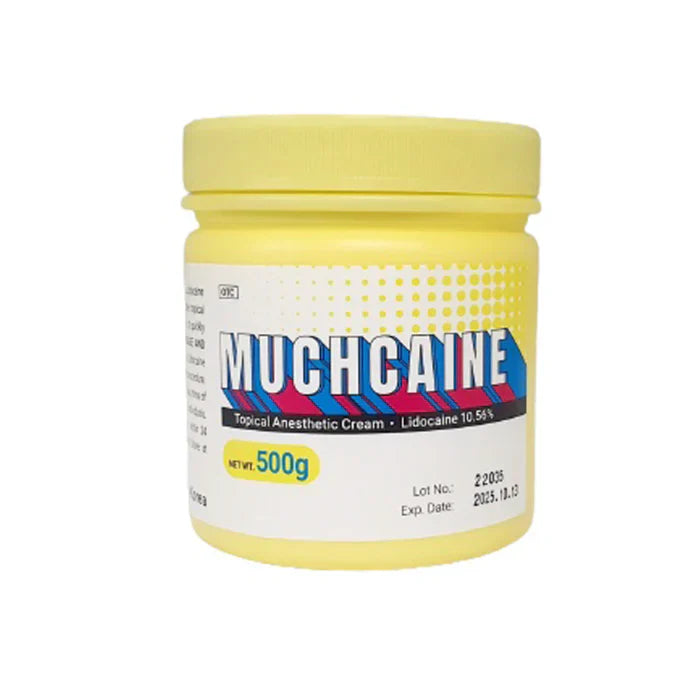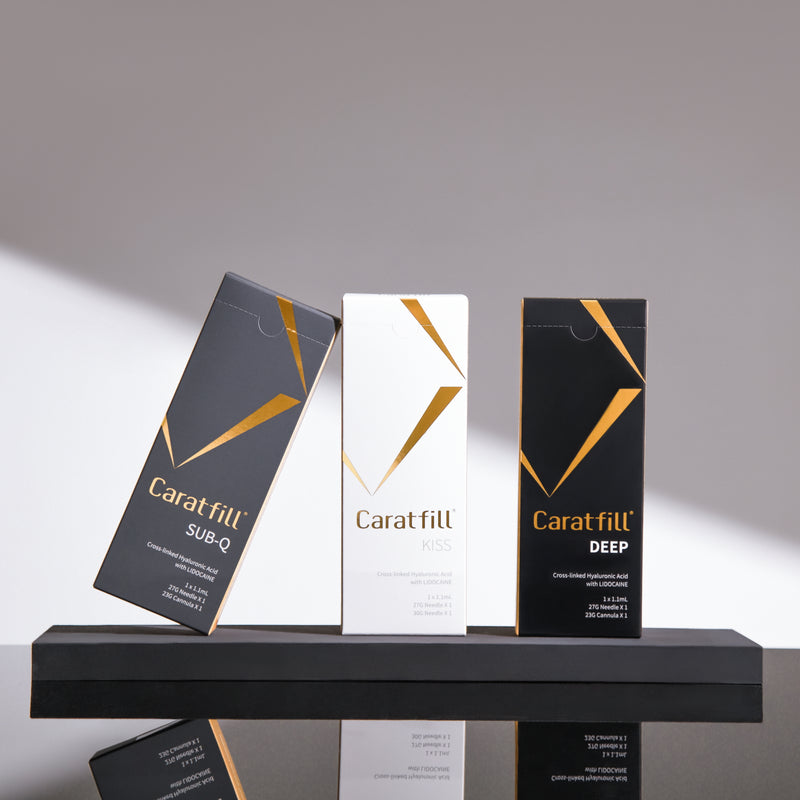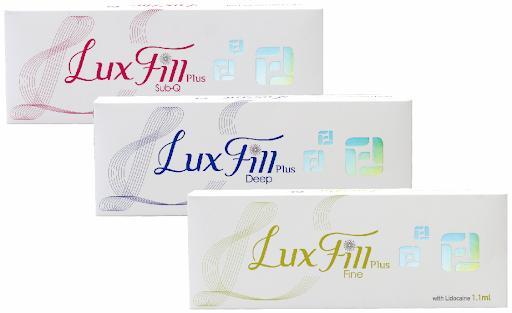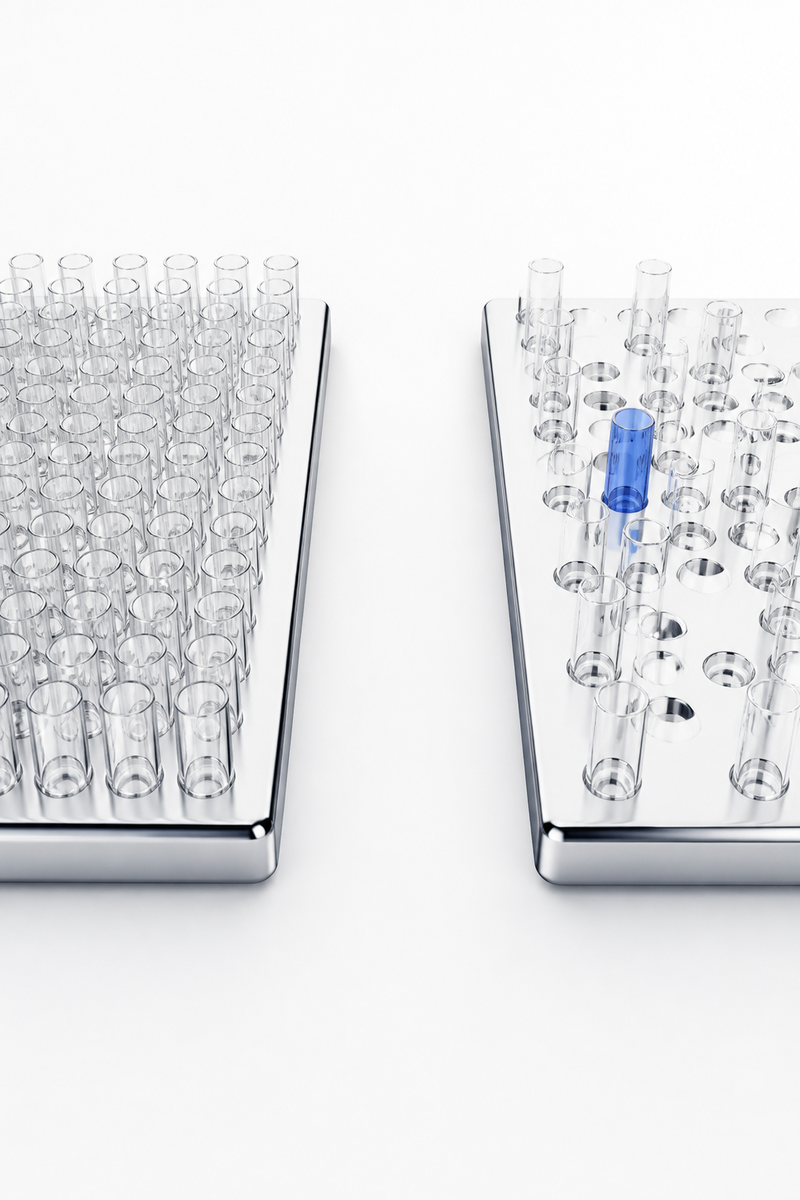
A numbing cream on one shelf declares lidocaine at 10.56 percent. A dermal filler on the next shelf declares lidocaine at 0.3 percent. Same molecule, a thirty-five-fold difference in concentration, and, less obviously, two entirely different regulatory systems. The Korean drug register has 263 licences to say about the first kind of product and nothing at all to say about the second, which is not a gap in the register but a description of how the two are classified.
Lidocaine as the product, and lidocaine as an ingredient
Most ingredient discussions assume one thing is being talked about. Lidocaine breaks that assumption because it occupies two structurally different positions in this category, and the position determines almost everything else about how a product is recorded, sourced and documented.
In the first position lidocaine is the product. A topical anaesthetic cream exists to deliver it, its concentration is the headline specification, and everything else in the tube is a vehicle. In the second position lidocaine is a passenger. A hyaluronic acid filler exists to deliver cross-linked HA, and the small lidocaine fraction is there to make the primary function more comfortable to deliver. Nobody buys a filler for its lidocaine content.
That difference is not a matter of emphasis. It changes which regulatory framework the finished article belongs to, which register records it, what documentation follows it across a border, and what a buyer can independently verify before purchase. Two products can both truthfully say "contains lidocaine" and share almost nothing beyond that sentence.
The concentrations make the split visible. Korean topical anaesthetic creams in this range declare lidocaine at 10.56 percent. Korean HA fillers in the same range declare it at 0.3 percent, roughly one thirty-fifth as much. A specification that differs by that margin is not a variation on a theme; it is two different design intents that happen to use the same molecule.
Reading the two positions side by side makes the split concrete, and it also shows how little the shared ingredient name carries.
| Lidocaine as the product | Lidocaine inside another product | |
|---|---|---|
| Typical article | Topical anaesthetic cream | Cross-linked HA dermal filler |
| Declared concentration | 10.56 percent | 0.3 percent |
| Role in the formulation | The reason the product exists | Comfort component alongside the primary material |
| Regulatory framework | Drug | Medical device |
| Drug-register ingredient search | Returns the licence | Returns nothing, correctly |
| What differentiates products | Concentration, vehicle, classification code | HA concentration, cross-linking, rheology |
What the drug register holds: 263 licences
Searching the Korean drug register by ingredient returns 263 lidocaine licences, 219 of them currently valid and 44 withdrawn or expired. That is the largest population this series has examined, several times the size of the placenta or polydeoxyribonucleotide entries, and its internal structure is unusually informative.
Thirty licences are injectables. Twenty-nine of those are prescription-only and filed under [01210], the local anaesthetics class, with one filed under [02560] for haemorrhoid preparations. The oldest dates to January 1979, which places this molecule in the pharmacopoeia decades before the aesthetics market that now buys it.
The 44 withdrawn or expired licences are worth a glance too, because they are the largest lapsed set in this series by some margin. A category that has accumulated and shed licences over four decades behaves differently from one that appeared recently and has never lost an entry: it means formulations have been retired, holders have exited, and the current 219 are survivors of a longer process rather than a snapshot of a new market. Placenta extract, by contrast, showed 38 licences with zero withdrawals.
The remaining 189 licences are non-injectable, and this is where the pattern that held cleanly for other ingredients stops holding. In the placenta entry, every non-injectable licence was over-the-counter and every injectable was prescription-only, with zero exceptions across 41 valid licences. Polydeoxyribonucleotide behaved the same way. Lidocaine does not. Of its 189 non-injectable licences, 139 are over-the-counter and 50 are prescription-only. The two supply classes coexist inside the same route.
The classification codes scatter in the same way. The 189 non-injectable licences spread across six classes: 109 under [01210] local anaesthetics, 35 under [02650] for preparations treating parasitic skin conditions, 22 under [02640] analgesic and anti-pruritic preparations, 18 under [02560] haemorrhoid preparations, four under [02310] dental and oral preparations, and one under [02690] other external preparations. One molecule, six therapeutic filings, because what a preparation is for changes where it is filed even when what it contains does not change.
What the drug register does not hold: fillers
Run the same search expecting to find the fillers that declare lidocaine and none of them appear. That absence is complete and it is correct.
A cross-linked hyaluronic acid filler is not regulated as a drug in Korea. It belongs to the medical device framework, approved on the basis of what the material does physically rather than pharmacologically, and it therefore sits in an entirely separate register with its own numbering, its own approval route and its own documentation. The reasoning behind that classification, and what it changes for a buyer, is set out in why your HA filler is not in the drug register.
The lidocaine inside such a filler does not pull the product back across that boundary. It is a declared component of a device, disclosed on the packaging and in the specification, and the device approval covers the finished article as a whole. So a filler declaring 0.3 percent lidocaine will never appear in a drug-register ingredient search, no matter how many times the search is run or how the spelling is varied.
The practical failure this creates is specific and common. A buyer checks a filler against a drug-ingredient database, finds nothing, and concludes either that the product is undocumented or that the supplier misdeclared it. Both conclusions are wrong and both are reached honestly, because the search itself gave no signal that it was aimed at the wrong record set. Registers do not warn you when you ask them about something outside their scope; they simply return zero, and a zero looks the same whether it means absence or category mismatch.
This is worth stating plainly because the opposite inference is easy to make and wrong in both directions. Finding zero results for a filler does not mean it is unrecorded, unapproved or irregular; it means the search was run against the wrong register. And finding 263 results for lidocaine does not mean every product containing lidocaine inherits that status, since almost none of those 263 licences has anything to do with fillers.
One further asymmetry sits inside the classification spread and is easy to walk past. The 109 licences filed under [01210] as local anaesthetics are the ones a buyer in this field would expect to find. The other 80 are not: preparations for parasitic skin conditions, analgesic and anti-pruritic products, haemorrhoid treatments and dental preparations all contain the same molecule and all were filed for something else entirely. A count of 189 non-injectable lidocaine licences therefore overstates the anaesthetic population by a wide margin, and anyone citing the total as a measure of that market is citing four other markets along with it.
Why a filler carries lidocaine at all
The functional reason is straightforward and worth separating from the regulatory one. Injecting a viscous gel into dermal tissue is uncomfortable, and including a small anaesthetic fraction in the gel itself means the comfort measure arrives at exactly the moment and place the material does, without a separate step.
The consequence for product lines is that lidocaine content becomes a variant axis rather than a feature. A manufacturer will often offer the same gel with and without it, and the choice between them is a clinical one made by the practitioner rather than a quality difference between two grades of product. A filler without lidocaine is not a lesser filler.
That variant structure has a sourcing consequence that is easy to miss. When a line ships in both forms, the two versions are usually separate stock items with separate codes rather than options on one item, so an order placed against a line name without specifying which version can arrive as either. The declared composition on the box is what settles it, and that is a purchasing detail rather than a clinical one.
The consequence for reading a specification is that the lidocaine figure should be read as a fixed formulation detail, not as a dose to be compared across products. At 0.3 percent it is broadly consistent across the Korean HA filler lines examined here, which means it rarely differentiates one from another and almost never deserves the attention it gets in comparison charts. The specifications that do differentiate them are the HA concentration, the cross-linking approach and the rheology.
There is also a timing point buried in the dates. The oldest injectable licence in this entry was granted in 1979 and the oldest non-injectable in 1991, which means lidocaine had a settled regulatory identity in Korea for decades before HA fillers existed as a product category at all. The filler industry did not introduce this molecule to the register; it borrowed a component that was already there and placed it inside an article governed by a different framework. That order of events explains why the two positions never merged into one record: the drug classification was established first and simply continued, while the device framework grew up beside it.
Reading a lidocaine declaration on either kind of product
The same declaration means different things depending on which position the molecule occupies, so the checks differ too.
Most of the confusion in this area comes from running a correct check in the wrong place, so the order of the checks matters more than any single one of them. Establishing the framework first turns the rest into simple lookups; skipping that step makes every later result ambiguous.
- Establish which product you are holding first. If lidocaine is the headline active and the concentration is in the double digits, it is an anaesthetic preparation and the drug register is the right place to look. If it appears at a fraction of a percent alongside a cross-linked HA figure, it is a component of a device and the drug register will return nothing.
- Do not generalise the supply class. Non-injectable lidocaine licences split 139 over-the-counter against 50 prescription-only. Whether a specific product requires a prescription is a per-product fact recorded in its own licence entry, and no rule about the category settles it.
- Read the classification code, not just the class name. A licence filed under [02650] for parasitic skin conditions and one filed under [01210] as a local anaesthetic can both contain lidocaine and be intended for completely different uses. The code records purpose.
- Check the concentration against the product type, not against other products. 10.56 percent and 0.3 percent are both normal figures in their own context and meaningless when compared with each other.
- Expect a different paper trail on each side. A drug-classified anaesthetic and a device-classified filler carry different documentation across a border, which matters at import even when both products came from the same country and the same shelf.
What none of these checks addresses is application: how much, for how long, on which area, under what conditions, or in combination with what. Those are clinical decisions for a qualified practitioner, and topical anaesthetics in particular are a category where the gap between a specification and a safe application is entirely filled by that expertise. This article stops at the label deliberately.
One more asymmetry follows from all of this and is worth naming, since it cuts against the intuition that more regulation means more visibility. The anaesthetic cream, a product a buyer might assume is the simpler of the two, is the one with 263 public licence records behind its ingredient and a per-product supply classification anyone can look up. The filler, which involves a more involved manufacturing process and a higher unit price, returns nothing at all from that same search. Public verifiability and product sophistication are not correlated here, and assuming they are is how a buyer ends up trusting the wrong signal.
Both categories in KSTATION sourcing
Both positions are represented in the current range and they are stocked as the different things they are. The anaesthetic side includes MUCHCAINE CREAM 500g and the wider anaesthetics and ointments selection, where lidocaine is the declared active. The filler side includes CARATFILL and LUXFILL, where lidocaine appears at 0.3 percent as a component of a device-classified HA gel.
Because the two sit under different frameworks, the pre-listing check differs accordingly: drug-classified products are checked against the drug register for declared ingredient, supply classification and licence holder, while device-classified products are checked against device records instead. The method is set out in the Editorial and Sourcing Policy. Running the wrong check against the wrong register produces a confident zero that means nothing, which is the specific error this article exists to prevent.
Frequently asked
Is lidocaine cream prescription only in Korea?
It depends on the specific product, and the register shows why no general answer works. Of 189 non-injectable lidocaine licences, 139 are classified over-the-counter and 50 are prescription-only. Supply class is recorded per licence rather than per ingredient or per route, so the classification of one product says nothing about another.
Why does a dermal filler contain lidocaine?
To make the injection of a viscous gel more comfortable at the moment and site of placement, without a separate step. It is typically a variant axis rather than a quality difference, and many lines offer the same gel with and without it. The choice between them is a clinical one.
How much lidocaine is in a dermal filler?
Korean HA filler lines examined here declare 0.3 percent, roughly one thirty-fifth of the 10.56 percent found in topical anaesthetic creams in the same range. Because the figure is broadly consistent across filler lines, it rarely distinguishes one product from another; HA concentration, cross-linking and rheology do.
Why does a filler not appear in the drug register?
Because cross-linked HA fillers are regulated as medical devices in Korea, not as drugs, and are recorded in a separate register with its own approval route. The lidocaine they declare does not move them across that boundary. A zero result from a drug-register search means the search was run against the wrong register, not that the product is unrecorded.
What class does the Korean register put lidocaine in?
Six different classes on the non-injectable side alone: 109 under [01210] local anaesthetics, 35 under [02650] parasitic skin conditions, 22 under [02640] analgesic and anti-pruritic, 18 under [02560] haemorrhoid preparations, 4 under [02310] dental and oral, and 1 under [02690] other external preparations. The code records what a preparation is for, so one molecule appears in several places.
Sources & references
- Ministry of Food and Drug Safety (MFDS), Korean drug product licence register, ingredient query "Lidocaine" (263 licences, 219 valid), retrieved 2026-08-24. data.go.kr
- MFDS Korean drug product licence register, classification and supply-class breakdown for the same query (non-injectable 189: 139 over-the-counter / 50 prescription-only; injectable 30: 29 prescription-only / 1 over-the-counter), retrieved 2026-08-24. data.go.kr
- Product specifications as declared by manufacturers for the topical anaesthetic and HA filler lines referenced (lidocaine 10.56 percent and 0.3 percent respectively). kstations.com
- KSTATION, Editorial & Sourcing Policy (register-first verification, matched to the framework each product falls under). kstations.com
Disclaimer. This article is general educational information and is not medical advice. It describes how lidocaine is recorded in the Korean drug licence register, how supply classification and classification codes are distributed across that record, and why device-classified products containing lidocaine do not appear there. It makes no claim about what any product does and gives no guidance on application, quantity, duration or combination. Topical anaesthetics and dermal fillers referenced here are supplied for professional use by qualified practitioners. Regulatory status varies by country and changes over time.