Three listings in our skin booster range put the word botulinum in their ingredient line: LusciTox and Hyalmass Aquatox, both added in October 2026, and JUVEHEAL B. Read side by side, they share less than the word suggests. Each calls its peptide something different. None states how much of it is present. None of the three names matches an entry in Korea's cosmetic ingredient dictionary. And one of the three is not an injectable at all.
Three listings, three names for the peptide
| Listing | Name used for the peptide | Peptide amount | Other declared actives | Format | Declared use |
|---|---|---|---|---|---|
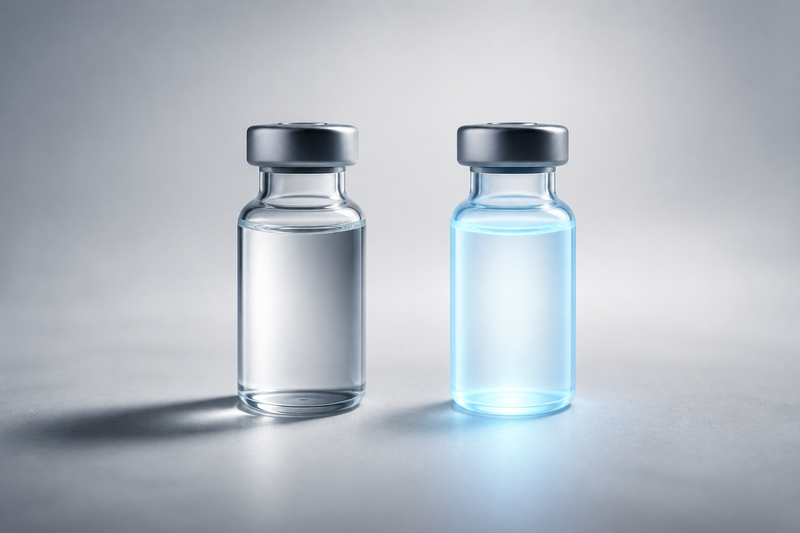
| LusciTox | Botulinum Light Chain Peptide | Not stated | GHK-Cu, polynucleotide (PN), succinic acid, hyaluronic acid (HA); none quantified | 3 mL liquid, 1 vial | Injection, by licensed professionals |
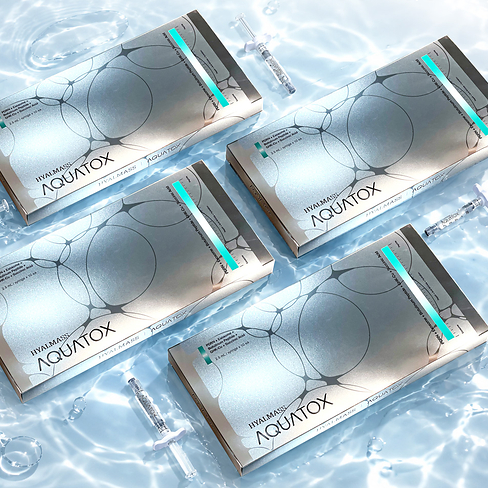
| Hyalmass Aquatox | Botulinum-like Peptide (Botulinum Peptide elsewhere on the page) | Not stated | HA 1%, succinic acid 1.6%, GHK-Cu, exosome complex, PDRN | 2.5 mL, 10 pre-filled syringes | Injection, professional use |
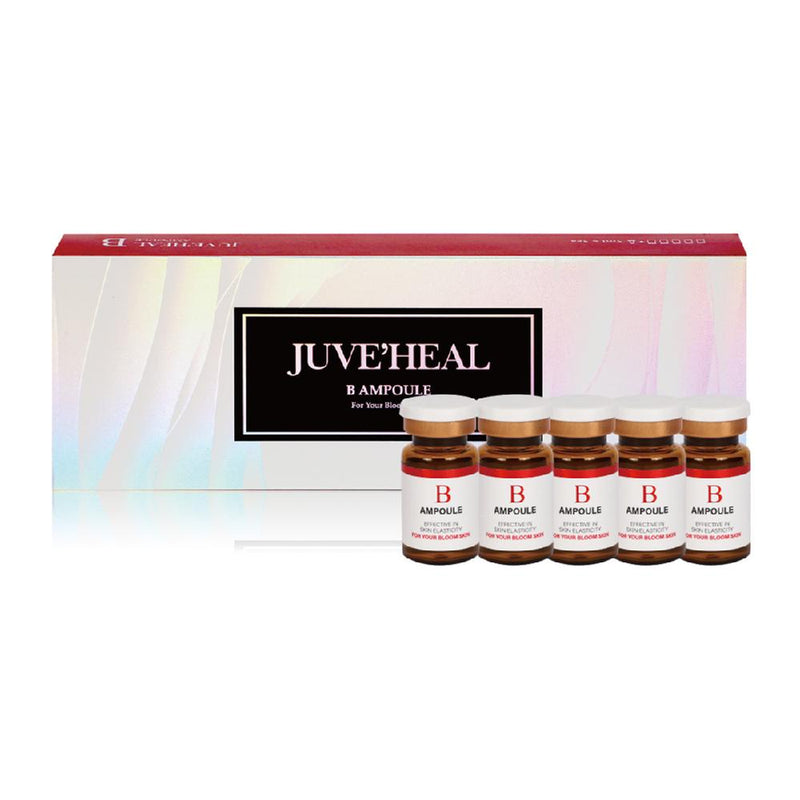
| JUVEHEAL B | Botulinum Peptide (Botulpeptide) | Not stated | PDRN, a growth-factor complex (3GF), HA; niacinamide 2.0%, adenosine 0.04% | 5 mL, 5 vials | Topical, for external use |
The three names are not variations of one term. "Light chain" refers to one of the two chains of the botulinum neurotoxin molecule, and LusciTox's page describes its peptide as a fragment inspired by that chain. "Botulinum-like" describes a resemblance rather than an origin. "Botulpeptide" reads as a trade name. Each page then describes the peptide's purpose by reference to botulinum toxin. Those are the pages' own claims about effect, and we do not repeat them here.
What none of the pages gives is the information that would let a buyer identify the ingredient: a standard ingredient name, a source, or an amount.
What Korea's cosmetic ingredient dictionary lists under botulinum
Korea's Ministry of Food and Drug Safety (MFDS) publishes a cosmetic ingredient dictionary, the list of standard names that ingredient labels are expected to use. Searching it for 보툴리눔 (botulinum) returns 16 entries. Every one of them is a peptide.
Their English names are built the same way: "Clostridium Botulinum Polypeptide-1" or "-2", or in one case "Clostridium Botulinum Oligopeptide-1", joined to other peptide names such as Hexapeptide-40 or Oligopeptide-91. Most are described as single-chain recombinant peptides produced by fermenting E. coli. One is described as synthesised from the amino-acid sequence of botulinum neurotoxin type A.
None of the 16 is called a light chain peptide, a botulinum-like peptide or Botulpeptide. So the names on these three listings are not dictionary names, and none of the pages says which dictionary entry, if any, its peptide corresponds to. Where a carton carries a full ingredient list, that list is the place a standard name would appear, and it is the thing to read before treating any two of these products as containing the same peptide.
The quantified ingredients are the ones with a reference point
Across the three pages, some ingredients come with a figure and some do not, and the pattern is consistent.
Hyalmass Aquatox gives two amounts: hyaluronic acid at 1% and succinic acid at 1.6%. JUVEHEAL B gives two: niacinamide at 2.0% and adenosine at 0.04%, under a heading that identifies them as functional ingredients. Those two figures match the levels Korea's functional cosmetics rules set for those ingredients, niacinamide from 2% for brightening and adenosine at 0.04% for wrinkle care, which is why a cosmetic that wants to make those claims states them. LusciTox gives no amounts for any of its five ingredients.
The peptide that gives each product its name is not quantified on any of the three. Neither are GHK-Cu, PN, PDRN, the exosome complex or the growth-factor complex. The figures that do appear belong to ingredients with an established reference: a regulatory level, or a conventional concentration. For the ingredients a buyer is most likely to choose these products for, the pages give a name and nothing to measure it by. Reading a copper peptide declaration in more detail is covered in reading a GHK-Cu booster.
Succinic acid, the other ingredient two of them share
LusciTox and Hyalmass Aquatox both list succinic acid, an organic acid. Aquatox states 1.6%. LusciTox lists it without an amount.
The 1.6% figure is not unique to Aquatox. SYNERFILL Vivid, a booster sold in a 6 mL vial, declares sodium succinate at 96 mg, which works out to the same 1.6%. Two things differ, though. SYNERFILL names the salt, sodium succinate, while Aquatox names the acid, and the two are related but not interchangeable names on a label. And SYNERFILL gives its figure in milligrams per vial, Aquatox as a percentage. A buyer comparing boosters on succinic content needs both the form and the basis before the numbers mean the same thing.
Two are injectables, one is labelled for external use
LusciTox is a ready-to-use liquid in a glass vial, for micro-injection by licensed professionals. Hyalmass Aquatox comes as ready-to-use pre-filled syringes, for needle injection in professional use. JUVEHEAL B is different in kind. Its page labels it for external use only as a topical cosmetic product, applied with microneedling devices, and lists its storage as room temperature, 1 to 30°C.
That matters more than the peptide name. A buyer who groups the three because all three say botulinum peptide would be grouping two injectables with a topical ampoule. How Korean ampoule pages state that distinction, and what each kind of declaration means, is set out in topical or injectable: what a Korean ampoule declares.
Sourcing botulinum peptide boosters, and what to check
KSTATION supplies LusciTox as a single 3 mL vial, Hyalmass Aquatox in boxes of ten 2.5 mL syringes and JUVEHEAL B in boxes of five 5 mL vials, within our skin boosters and ampoules collection. On arrival, the carton's ingredient list is the most useful thing to read: it is where a standard peptide name and any stated amounts would appear.
Licensed botulinum toxins are a different product class with their own register entries, and the ones we supply are compared by maker and form in Korean botulinum toxins compared.
Frequently asked
What is a botulinum peptide in a skin booster?
It is a peptide whose name refers to botulinum, listed as one ingredient among several. Korea's cosmetic ingredient dictionary has 16 standard names containing botulinum, all of them peptides, most made by recombinant fermentation. The three listings we read use their own names for the peptide and none matches a dictionary name.
Is a botulinum peptide booster the same as botulinum toxin?
No. The three pages list a peptide among five or six ingredients, and none gives a toxin content. Licensed botulinum toxins in Korea are drug register entries, each stating its content in units per vial.
How much succinic acid is in a skin booster?
Of the listings in our range, Hyalmass Aquatox declares succinic acid at 1.6% and SYNERFILL Vivid declares sodium succinate at 96 mg in 6 mL, also 1.6%. LusciTox lists succinic acid without an amount.
Sources and references
- Ministry of Food and Drug Safety (MFDS), cosmetic ingredient dictionary open data (CsmtcsIngdCpntInfoService01), entries with names containing 보툴리눔, retrieved 23 October 2026.
- Ministry of Food and Drug Safety (MFDS), Regulation on the Review of Functional Cosmetics, Annex 4, ingredient levels for niacinamide (whitening) and adenosine (wrinkle care).
- KSTATION product pages for LusciTox, Hyalmass Aquatox, JUVEHEAL B and SYNERFILL Vivid, declared composition, format and use, read 23 October 2026.
- KSTATION editorial policy, on how product facts are separated from claims in our writing.
All declarations are as shown on the product pages on 23 October 2026 and can change with new packaging. This article describes what listings declare and how ingredients are named. It makes no claim about the effect of any ingredient or product.