Twenty-two skin boosters in our range name at least one of the five ingredients most associated with brightening: glutathione, niacinamide, tranexamic acid, arbutin and vitamin C. Three of the 22 state how much of any of them is present. Of the five ingredients, only two appear on the list Korea uses to recognise a cosmetic as a whitening product, and only one listing states an amount inside the range that list sets.
The reference point: Korea's list of whitening ingredients
Korea regulates whitening claims on cosmetics through its functional cosmetics rules. Annex 4 of the Regulation on the Review of Functional Cosmetics names nine whitening ingredients, each with a set concentration. A product that uses one of them inside its range can be recognised as a whitening functional cosmetic without submitting further efficacy data.
Two of the five ingredients in this comparison are on that list: niacinamide at 2 to 5%, and arbutin at 2 to 5%. Vitamin C appears only in derivative forms, such as ethyl ascorbyl ether, ascorbyl glucoside and magnesium ascorbyl phosphate, not as plain ascorbic acid. Glutathione and tranexamic acid are not on the list at all.
That gives every brightening declaration a simple test. Is the ingredient one with a regulated level, and if so, does the page state an amount that can be checked against it? Most injectable boosters are not sold as functional cosmetics, so the list is not their rule. It is still the only published Korean reference point for how much of a brightening ingredient is enough to call a product whitening.
22 listings, side by side
| Listing | Named | Amount stated |
|---|---|---|
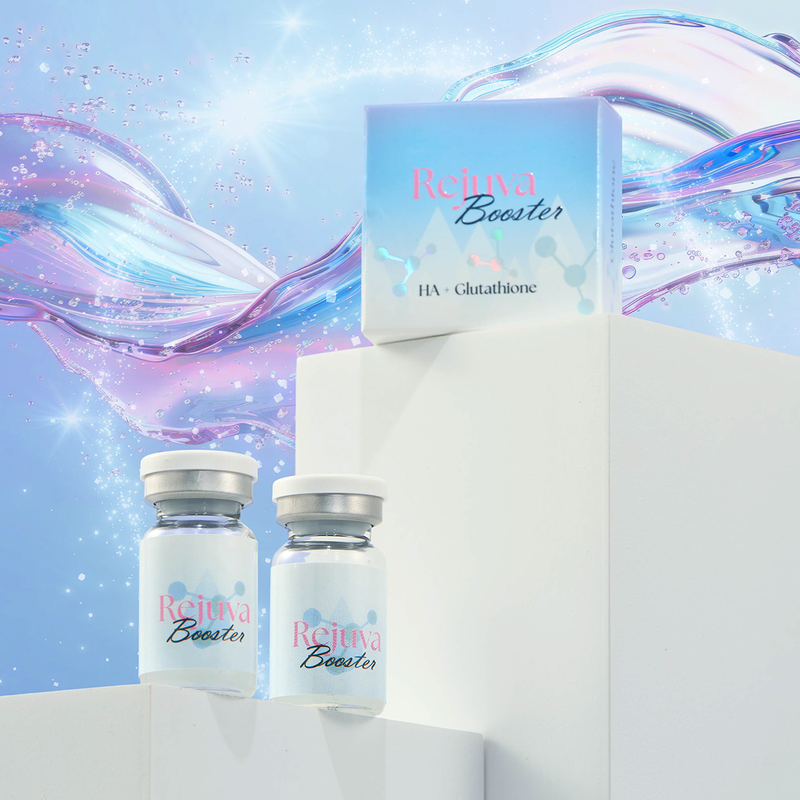
| Rejuva Booster | GSH | GSH 1 mg/mL |
| KIARA REJU | NIA | NIA 1 mg/mL |
| JUVEHEAL B | NIA | NIA 2.0% |
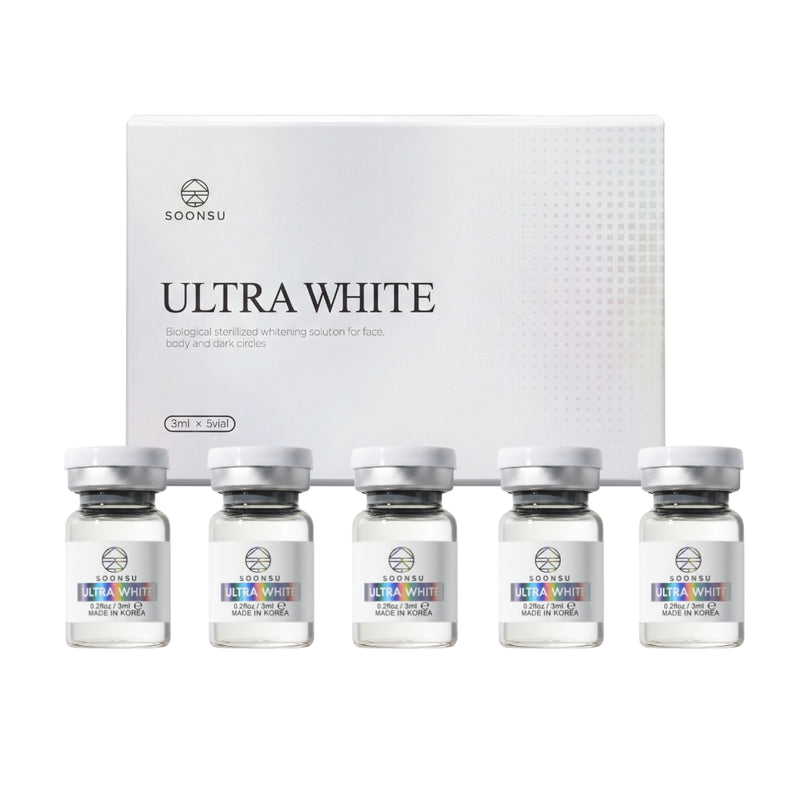
| SOONSU Ultra White | GSH, NIA, ARB, VC, tranexamoyl dipeptide-23 | None |
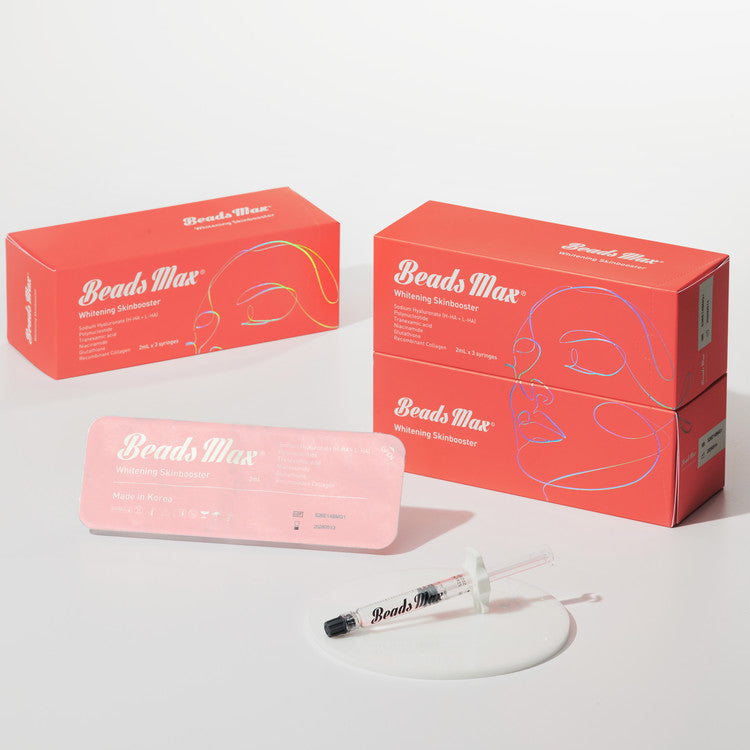
| Beads Max Whitening Skin Booster | GSH, NIA, TXA | None |
| SELASTIN TOX GF11 | GSH, ARB, VC | None |
| VELATOX GF11 | NIA, ARB, VC | None |
| SYNERFILL Vivid | GSH, TXA | None |
| SYNERFILL Vivid Plus | GSH, TXA | None |
| Hyalmass 60CC | GSH, NIA | None |
| Rejuva re:face | GSH, NIA | None |
| LAPUROON AURORA Vivid | GSH, VC | None |
| PLLACELL | GSH, VC | None |
| LACTO EXO COLLA | TXA, VC | None |
| Pine Bottle OMNI | NIA | None |
| CURENEX Intense Glow & Shine | GSH | None |
| REJUBEAU Aqua Bomb | GSH | None |
| REJUBEAU Eye Deal | GSH | None |
| ExoLume | GSH | None |
| PLAXOM | GSH | None |
| Rejuva Heal | GSH | None |
| Sunnyfill PN Booster | GSH | None |
The count covers every skin booster we currently sell whose own ingredient declaration names one of the five. Two professional peels and a scalp product that also name some of them are left out, and so are pages that mention one of the five only when describing a different product. Counted by ingredient, glutathione is named by 17 listings, niacinamide by 8, vitamin C by 6, tranexamic acid by 4 and arbutin by 3.
Glutathione: named by 17, quantified by one
Glutathione is the most common brightening ingredient in the range by a wide margin, and in many of the 17 it is a supporting ingredient listed after a nucleotide, an exosome or a hyaluronic acid base. Only Rejuva Booster puts it among its primary actives, beside cross-linked hyaluronic acid, and only Rejuva Booster gives an amount: 1 mg/mL.
That figure is worth setting against the glutathione injectables in the same catalog. A 3 mL vial of Rejuva Booster at 1 mg/mL holds 3 mg of glutathione. A single vial of Kuhnthione, a glutathione injection in the same catalog, is listed at 600 mg. The two share an ingredient name and differ in declared amount by a factor of two hundred, which is the clearest sign that a glutathione booster and a glutathione injection are different products rather than stronger and weaker versions of one. How a licensed glutathione injection is read is set out in reading a glutathione injectable.
For the other 16, the name is all there is. A buyer choosing among them on glutathione content has nothing on the page to compare.
Niacinamide: the only ingredient with both a regulated range and stated amounts
Eight listings name niacinamide and two give an amount, and those two sit at opposite ends of the regulated scale. JUVEHEAL B states 2.0%, under a heading that identifies it as a functional ingredient. That is the lower bound of the 2 to 5% range in Korea's whitening list. KIARA REJU states 1 mg/mL, which is 0.1%, one twentieth of that lower bound.
Neither figure says anything about results, and KIARA REJU does not present itself as a whitening product: niacinamide is the third of its declared actives, after hyaluronic acid and a nucleotide. The comparison shows what the functional range is useful for. It turns a percentage into a position: at the threshold, or well below it.
The other six name niacinamide without an amount. Rejuva re:face, which describes itself as a dual-functional cosmetic for whitening and wrinkle care and names niacinamide as its whitening ingredient, is one of them. A functional cosmetic claim implies a level inside the range, but the page does not state the figure. JUVEHEAL B was read in more detail, alongside its peptide, in botulinum peptide on a skin booster label.
Tranexamic acid, and a peptide with a similar name
Four listings name tranexamic acid: LACTO EXO COLLA, SYNERFILL Vivid, SYNERFILL Vivid Plus and Beads Max Whitening Skin Booster. None gives an amount. Both SYNERFILL pages state several of their other actives in milligrams, hyaluronic acid, sodium succinate and nucleotides among them, and leave glutathione and tranexamic acid unquantified on the same line.
SOONSU Ultra White lists tranexamoyl dipeptide-23 first among its actives. That is a peptide built on tranexamic acid and listed under its own name, not tranexamic acid itself, and the two should not be counted as the same ingredient when comparing labels. In Korea, tranexamic acid is also a medicine with its own register history, covered in tranexamic acid: what the register calls it.
Arbutin and vitamin C: on the list in some forms, unquantified everywhere
Arbutin is named by three listings, SOONSU Ultra White, SELASTIN TOX GF11 and VELATOX GF11, and is one of the two ingredients here with a regulated whitening range. None of the three states an amount, so none can be placed against it.
Vitamin C is named by six. Two, LAPUROON AURORA Vivid and LACTO EXO COLLA, call it ascorbic acid. The other four say vitamin C without naming a form. The whitening list recognises specific derivatives rather than ascorbic acid, so on these pages the form matters as much as the amount, and neither is given.
Three of the 22 are labelled for topical or microneedling use
JUVEHEAL B is labelled for external use as a topical cosmetic. Rejuva re:face is a topical ampoule solution described as a functional cosmetic. LACTO EXO COLLA gives microneedling as its application method. The remaining 19 are presented as injectable boosters. It is no accident that the one listing stating a niacinamide level at the functional threshold is a topical cosmetic: the functional rules are written for cosmetics, and a product sold as one has a reason to state its level. How Korean ampoule pages declare topical or injectable use is covered in our topical or injectable comparison.
Sourcing brightening skin boosters by what they declare
KSTATION supplies all 22 listings in this comparison within our skin boosters and ampoules collection, including Rejuva Booster, the one glutathione booster that states its amount, Beads Max Whitening Skin Booster and SOONSU Ultra White, the two that name the most brightening ingredients. Where an amount matters, the carton's ingredient list and the manufacturer's documentation are where it would be stated; the product pages, with three exceptions, do not.
Frequently asked
Which Korean skin boosters contain glutathione?
In our range, 17 skin boosters name glutathione, including Rejuva Booster, SYNERFILL Vivid, Beads Max Whitening, SOONSU Ultra White and CURENEX Intense Glow & Shine. Only Rejuva Booster states an amount, 1 mg/mL.
How much niacinamide is in a skin booster?
Of eight listings that name it, two state an amount: JUVEHEAL B at 2.0% and KIARA REJU at 1 mg/mL, which is 0.1%. Korea's whitening functional cosmetic range for niacinamide is 2 to 5%.
Is tranexamoyl dipeptide-23 the same as tranexamic acid?
No. Tranexamoyl dipeptide-23 is a peptide built on tranexamic acid and listed under its own ingredient name. SOONSU Ultra White names the peptide; four other listings name tranexamic acid itself.
Sources and references
- Ministry of Food and Drug Safety (MFDS), Regulation on the Review of Functional Cosmetics, Annex 4, whitening ingredients and concentrations.
- KSTATION product pages for the 22 skin boosters listed above and for Kuhnthione, declared ingredients and amounts as rendered on the page, read 23 October 2026.
- KSTATION editorial policy, on how product facts are separated from claims in our writing.
All declarations are as shown on the product pages on 23 October 2026 and can change with new packaging. This article compares what listings declare for professional buyers. It makes no claim about brightening or any other effect of any ingredient or product.