When hair starts to look thinner, the instinct is to reach for products that promise to act on the hair itself. The more useful place to start is one layer down, on the scalp. The scalp is the skin that hair grows out of, and the condition of that skin (its oil balance, how clean the follicle openings are, how soothed or irritated it feels) sets the surroundings each strand grows into. A scalp-care routine for thinning hair is really about keeping that surrounding skin clean, calm, and supported, day after day.
Why the scalp comes first for thinning hair
Hair thinning has several drivers, and the most common pattern, androgenetic thinning, is a gradual miniaturization of follicles influenced by genetics and hormones rather than by how you wash your hair.1 That is worth stating plainly, because it sets a realistic frame: a scalp routine does not change genetics. What it can do is address the part of the picture that daily care actually touches, which is the condition of the scalp skin around each follicle.
That surrounding skin matters because the follicle opening sits within it. When the scalp carries excess sebum (its natural oil), or a buildup of dead cells and dandruff, the follicle openings can become congested and the skin can turn flaky or itchy. Seborrheic conditions of the scalp are common, tend to recur, and are managed rather than cured, with consistent cleansing and soothing ingredients doing much of the practical work.2
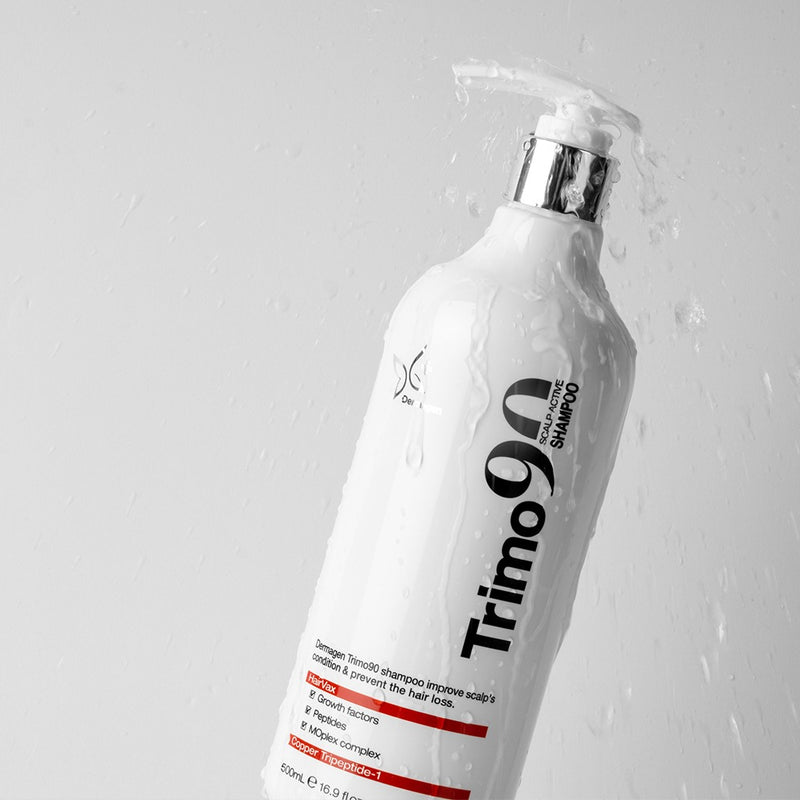
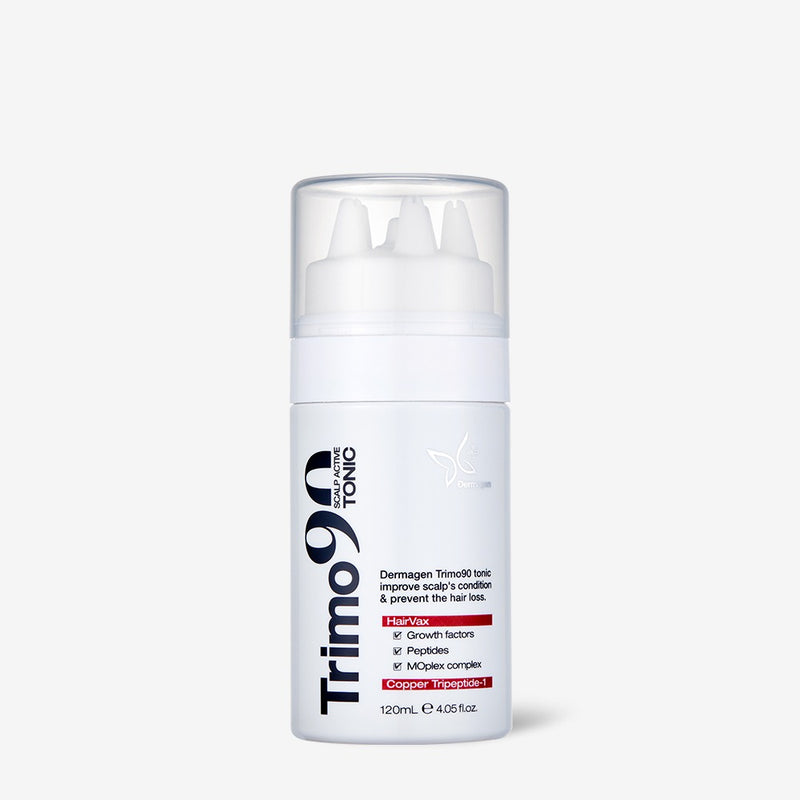
So the goal of scalp care for thinning hair is modest and specific. It is not to regrow lost hair on demand. It is to keep the follicle environment clean, balanced in oil, and free of the irritation that makes an already sensitive scalp feel worse. The two Korean products used as the worked example below, both from the Trimo90 line, are built around exactly that division of labor: one cleanses, one stays on the scalp between washes.
The functional ingredients, and what each does
Both Trimo90 products carry ingredients that Korea's Ministry of Food and Drug Safety (MFDS, commonly referred to as the K-FDA) designates as functional for hair-loss symptom relief. That phrase is a regulatory designation about the ingredients, not a promise of a specific result for any individual, and it is worth reading it that way. What follows is what each ingredient is understood to do at the level of the scalp.
Salicylic acid is a beta-hydroxy acid used for exfoliation and sebum control. On the scalp, that means helping to loosen and clear dead-cell buildup around the follicle openings and helping to keep excess oil in check, which is why it appears in both the cleanse and the leave-in step.
Dexpanthenol (a provitamin B5 derivative) is included for moisture and to soothe the scalp. It supports the scalp's moisture barrier, the same barrier function that gets stressed when skin is over-cleansed or irritated, and it appears in both products for that reason.
Niacinamide (a form of vitamin B3) is in the shampoo for scalp resilience and to nourish the area around the root. It is a well-tolerated, supportive ingredient rather than an aggressive one, which suits a product meant for daily use on a sensitive scalp.
L-menthol appears in the tonic for an immediate cooling, soothing sensation on contact. It is the reason a leave-in tonic feels different from a cream: it reads as cool and light, which is useful when a scalp feels heated, itchy, or dry between washes.
The two-step routine: cleanse, then leave-in
The routine is built on a simple division. The shampoo is the cleanse step, used in the shower to clean the scalp and clear buildup. The tonic is the leave-in step, applied afterward and left on to keep the clean scalp soothed and balanced through the day. One resets the scalp, the other maintains it. The table below sets the two side by side.
| Step | Product form | Key actives | How to use |
|---|---|---|---|
| Cleanse | Trimo90 Shampoo, 500mL, weakly acidic, free of harsh surfactants | Salicylic acid, dexpanthenol, niacinamide | Lather on the scalp, leave on for at least 3 minutes, then rinse thoroughly. Daily. |
| Leave-in | Trimo90 Tonic, 120mL, leave-in spray, rapid absorption, no sticky residue | L-menthol, salicylic acid, dexpanthenol | On a clean, towel-dried scalp, spray and massage in. Do not rinse. Daily, reapply as needed. |
Read in order, the daily routine looks like this:
- Wet the hair and scalp, then work the shampoo into a lather focused on the scalp rather than the lengths.
- Leave the lather on the scalp for at least 3 minutes so the actives have contact time, then rinse thoroughly until no residue remains.
- Towel-dry the scalp so it is damp, not dripping.
- Spray the tonic onto the scalp and massage it in with the fingertips; do not rinse it out.
- Through the day, reapply the tonic when the scalp feels heated, itchy, or dry.

How to use each step safely
Both products are topical, external-use consumer scalp products, and most of the safe-use guidance is straightforward. For the shampoo, the two details that matter most are contact time and rinsing: leave the lather on for at least 3 minutes, then rinse thoroughly, because leftover residue can irritate the scalp. For the tonic, the key is that it is genuinely leave-in: apply it to a clean, towel-dried scalp, massage it in, and do not rinse it out. A mild tingling or temporary redness can occur in more sensitive individuals, which is consistent with the menthol and the acid working at the surface.
The contraindications are shared and worth taking seriously, and the safety note below sets them out in full. Products like these are designed for routine home use on intact scalp skin, so the cautions are about respecting that boundary.
What to expect, and the timing
Two timelines run in parallel here, and keeping them separate prevents disappointment. The sensory effects are immediate. The shampoo cleanses and soothes from the first wash, and the tonic cools on contact the moment it is sprayed on. Those are the parts you feel right away.
The functional side moves on a much slower clock. The hair-loss symptom relief associated with these designated ingredients depends on consistent use over several months, not days or weeks, which is in line with how scalp and hair concerns generally respond to topical care. There is no version of this routine that delivers a fast structural change, and any product that claims otherwise is overpromising.
The honest framing is therefore one of maintenance. A clean, balanced, soothed scalp is a better daily environment for the hair you have, and keeping that environment steady is the realistic payoff of a scalp routine. From a sourcing standpoint, that is the category these products sit in: scalp-care basics for thinning and shedding, sensitive scalps, and scalps prone to excess sebum and dandruff, curated as authentic Korean products rather than sold on a single dramatic claim.
Frequently asked questions
Frequently asked
How does a functional scalp shampoo help with thinning hair?
It works on the scalp environment rather than on the hair shaft. The Trimo90 Shampoo combines salicylic acid for exfoliation and sebum control, dexpanthenol for moisture and soothing, and niacinamide for scalp resilience and root nourishment. Together these help clear buildup around the follicle openings and keep the scalp clean and calm. Its ingredients are designated by Korea's MFDS as functional for hair-loss symptom relief, which describes the ingredients, not a guaranteed result. Visible symptom relief depends on consistent use over time.
What does the leave-in tonic add to the routine?
The tonic is the maintenance step between and after washes. Because it stays on the scalp, it keeps working when the shampoo has been rinsed away. L-menthol gives an immediate cooling, soothing sensation, salicylic acid continues to help control sebum and exfoliate, and dexpanthenol supports the moisture barrier and nourishes the root area. It absorbs quickly without a sticky residue, so it suits a scalp that feels heated, itchy, or dry during the day.
How long until I see a difference?
Separate the two timelines. The cleansing and the cooling are immediate: you feel them from the first use. The hair-loss symptom relief associated with the designated ingredients requires consistent use over several months, in line with how scalp and hair concerns generally respond to topical care. There is no fast structural change, so the realistic expectation is a steadily cleaner, calmer scalp, with any functional benefit accruing slowly through regular use.
Can I use both products daily?
Yes. Both are designed for daily use. Use the shampoo in the shower, leaving the lather on the scalp for at least 3 minutes before rinsing thoroughly, then apply the tonic to a clean, towel-dried scalp and leave it in. You can reapply the tonic during the day when the scalp feels heated, itchy, or dry. If your scalp is sensitive and you notice mild tingling or temporary redness, that can occur with the menthol and acid; reduce frequency if it persists.
What should I avoid for safety?
Do not use either product if you are hypersensitive to salicylic acid, or the tonic if you are hypersensitive to menthol. Do not apply to open wounds, severe eczema, or dermatitis. Both are for external use only: keep them away from the eyes, and rinse with water if contact occurs. Rinse the shampoo out thoroughly, since residue may irritate. Keep the tonic out of the reach of children, and store both between 1 and 30 degrees Celsius.
Disclaimer. This article is general educational information, current as of its publication date, and is not medical advice. It does not diagnose, treat, or guarantee any outcome. Follow each product's labeling and directions for use. Persistent or significant hair loss should be reviewed by a qualified clinician. Results vary between individuals and take time to appear.
Sources & references
- Ho CH, Sood T, Zito PM. Androgenetic Alopecia. StatPearls, NCBI Bookshelf, U.S. National Library of Medicine (genetic and hormonal drivers and progressive follicular miniaturization). ncbi.nlm.nih.gov/books
- Tucker D, Masood S. Seborrheic Dermatitis. StatPearls, NCBI Bookshelf, U.S. National Library of Medicine (common, recurrent scalp condition managed with consistent cleansing and keratolytic and soothing agents). ncbi.nlm.nih.gov/books