Most of the discomfort patients associate with an aesthetic appointment happens in the first few seconds of contact, at the skin surface. That is exactly the layer a topical numbing cream is designed to reach. Knowing how lidocaine works, how long it needs, and where its limits are turns numbing from a guess into a predictable step in the schedule.
How topical lidocaine works at the skin surface
Lidocaine is an amide-type local anesthetic, which simply describes the chemical link in its molecule and places it in the same family as several other commonly used anesthetics. Its mechanism is well established and narrow: it blocks voltage-gated sodium channels in sensory nerve endings.1 Those channels are what a nerve uses to fire a pain signal, so blocking them dampens the transmission of that signal from the skin surface toward the brain.
Applied as a cream, lidocaine produces surface anesthesia, sometimes called dermal anesthesia. The effect is local to the area where the cream sits, and it works from the outside in, reaching the fine nerve endings closest to the surface first. That is the right tool for procedures whose discomfort is concentrated at or just under the skin, and it is why the practical goal of a topical cream is to help reduce discomfort at the skin surface rather than to remove all sensation from deeper tissue.
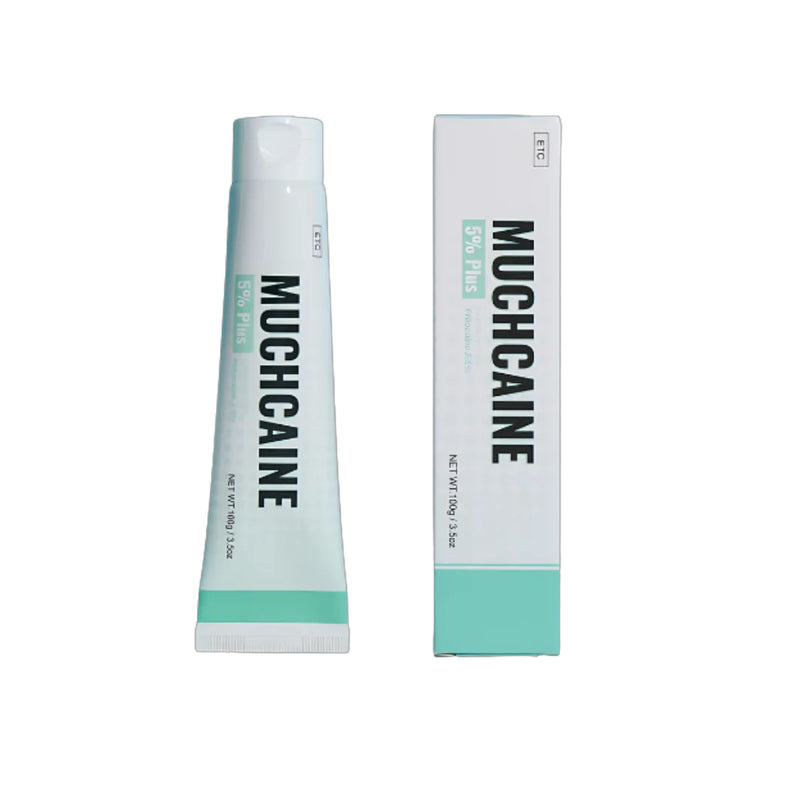
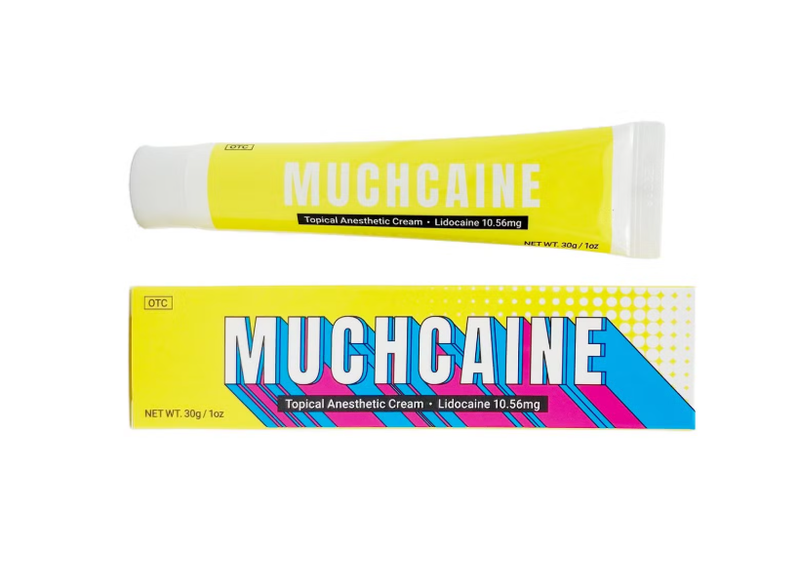
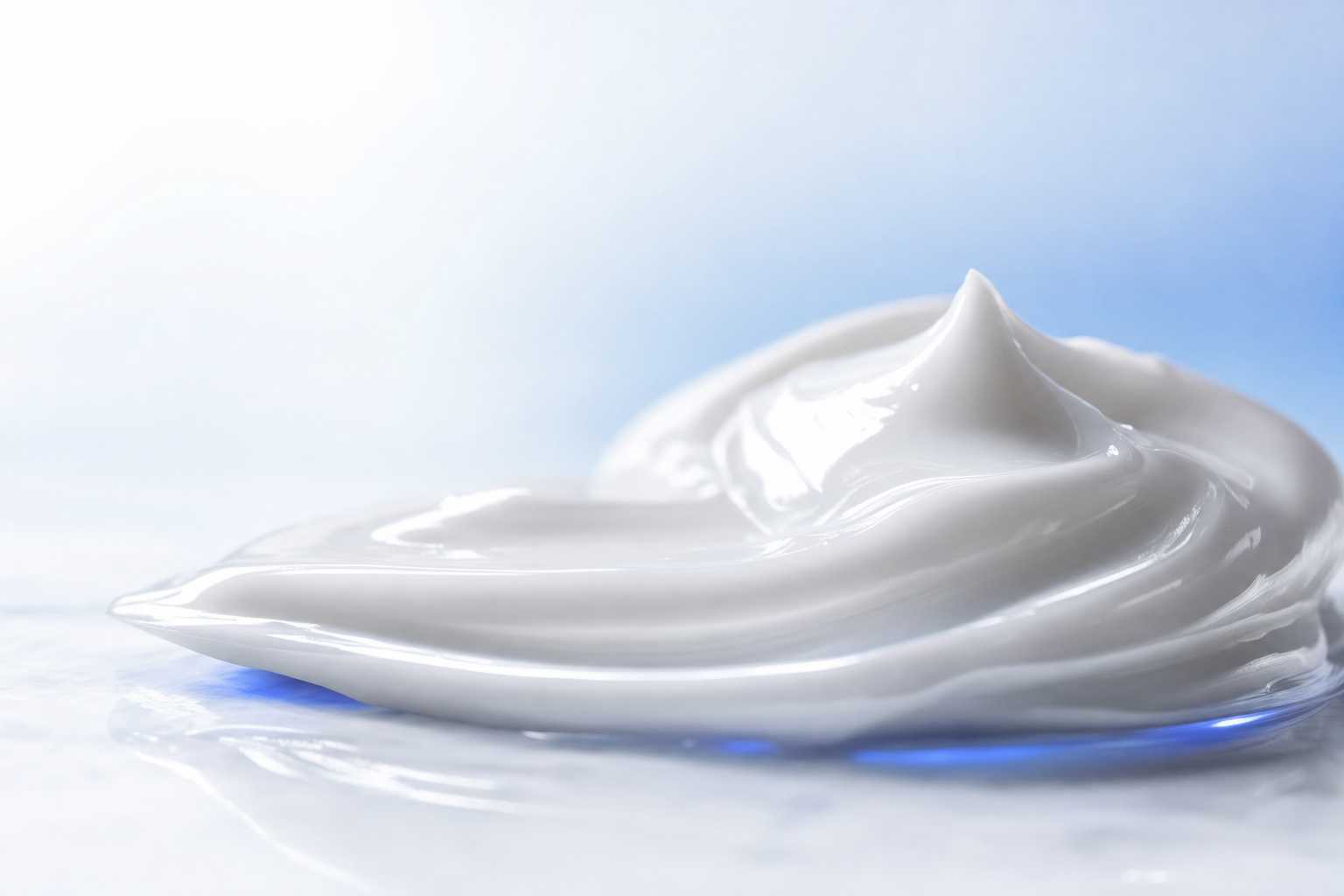
The example used throughout this guide is MUCHCAINE PLUS CREAM 100g (manufacturer Maypharm Co. Ltd.), a white cream base with lidocaine 10.56 percent as the active and benzalkonium chloride 0.2 mg as a preservative. It is formulated for external use on normal intact skin, which is the condition under which the surface-anesthesia mechanism behaves predictably.
Timing, occlusion, and onset
The single most common scheduling error with topical anesthetics is reading the cream too early. Under occlusion, meaning the applied cream is covered with a film or wrap, MUCHCAINE PLUS CREAM has an onset of 15 to 30 minutes, and the resulting surface anesthesia lasts roughly 1 to 2 hours, varying by individual and by how long the cream was left on. Building that window into the appointment, rather than starting the moment the cream goes on, is what makes the numbing reliable.
Occlusion is not an optional refinement; it is part of how the cream is meant to perform. Covering the applied layer with a thin film or wrap increases absorption and speeds onset, because it traps moisture and warmth at the surface and keeps the anesthetic in close contact with the skin instead of drying or rubbing off. The same effect is documented across topical anesthetics used before dermal procedures, where occlusion is standard practice for laser and microneedling preparation.2

A procedure-by-procedure timing guide
The table below anchors to the product's 15 to 30 minute onset under occlusion and offers general, neutral guidance for common procedures. Treat it as a starting frame, not a fixed protocol: the right wait depends on the area, the individual, and the clinician's judgment. The wait windows assume the cream is applied to normal intact skin and fully removed before the procedure begins.
| Procedure | Typical wait before start | Note |
|---|---|---|
| Dermal filler injection | About 20 to 30 minutes under occlusion | Targets surface discomfort at entry points; deeper sensation is not the goal of a topical. |
| Mesotherapy | About 20 to 30 minutes under occlusion | Many shallow points over an area; even coverage and full removal matter. |
| MTS / microneedling | About 20 to 30 minutes under occlusion | Apply only to intact skin; the cream must be off before needling begins. |
| Laser | About 20 to 30 minutes under occlusion | Remove all residual cream completely before the laser pass. |
| Tattoo | About 20 to 30 minutes under occlusion | Surface-level comfort over a defined area; mind total area and time on skin. |
| Waxing | About 20 to 30 minutes under occlusion | For minor surface procedures; apply to normal intact skin only. |
Using a numbing cream safely
Topical lidocaine is straightforward to use well, and the safety rules are mostly about respecting how absorption scales. The cream is absorbed through the skin, so the larger the area and the longer it stays on, the more anesthetic enters the body. That is the reasoning behind the cautions below, not an abstract warning.
Put as a short pre-procedure sequence, the safe-use logic looks like this:
- Confirm there is no history of amide-anesthetic hypersensitivity before applying.
- Apply to clean, normal intact skin only, never to broken skin, wounds, or mucous membranes.
- Keep the treated area and the dwell time within reasonable limits rather than maximizing both.
- Cover with a film for occlusion, then wait the full onset window before reading the effect.
- Wipe away all residual cream completely before the procedure starts.
Storage and residual removal
Storage is simple and worth getting right, because a cream that has been frozen or left in sunlight is no longer a known quantity. Keep MUCHCAINE PLUS CREAM sealed at room temperature, between 1 and 30 degrees Celsius, away from freezing and out of direct sunlight. A sealed tube held in those conditions stays consistent from one application to the next.
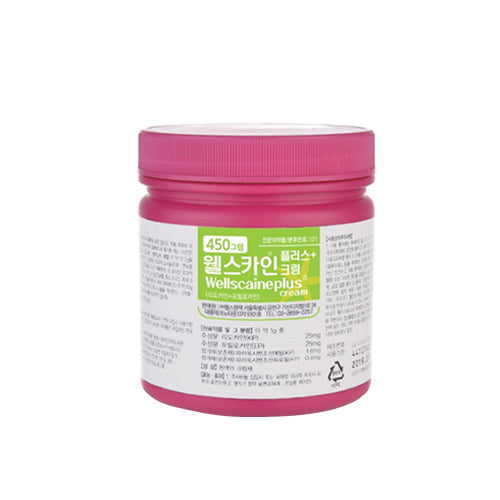
The last step before any procedure is removal. Residual cream left on the skin can interfere with the procedure itself and continues to be absorbed, so wiping the area completely clean is both a safety step and a practical one. From a sourcing standpoint, KSTATION carries authentic Maypharm numbing creams, including MUCHCAINE PLUS CREAM, alongside other formats in the numbing-cream category, so the product matches its official labeling and the storage and directions can be followed as written.
Frequently asked questions
Frequently asked
How does a numbing cream work?
A topical lidocaine cream works by blocking voltage-gated sodium channels in the sensory nerve endings near the skin surface.1 Those channels are how a nerve transmits a pain signal, so blocking them dampens that signal and produces surface anesthesia in the area where the cream is applied. It acts locally and from the outside in, which is why it is suited to discomfort concentrated at or just under the skin.
How long before it takes effect?
For MUCHCAINE PLUS CREAM, onset is 15 to 30 minutes when the cream is applied under occlusion. The practical move is to apply it, cover it, and wait the full window before checking, rather than reading the effect after only a few minutes. The exact time within that range varies by person and by area.
Does covering it (occlusion) help?
Yes. Covering the applied cream with a film or wrap (occlusion) increases absorption and speeds onset by trapping warmth and moisture and keeping the anesthetic in close contact with the skin. Occlusion is standard practice when topical anesthetics are used before dermal procedures such as laser and microneedling.2
How long does the numbness last?
The surface anesthesia from MUCHCAINE PLUS CREAM lasts roughly 1 to 2 hours, depending on the individual and on how long the cream was left on the skin. That window is generally enough for the surface-level steps of common aesthetic procedures, but it is a range rather than a fixed figure.
What should I avoid for safety?
Avoid it entirely if there is a known hypersensitivity to amide-type anesthetics. Do not apply it to open wounds or mucous membranes, and use it only on normal intact skin. Avoid broad-area or prolonged application, since both raise the risk of systemic toxicity, and remove all residual cream completely before the procedure. Anyone who is pregnant or breastfeeding should consult a doctor before use.
Disclaimer. This article is general educational information, current as of its publication date, and is not medical advice. Follow the product's official instructions and a clinician's guidance, and confirm contraindications before use. Storage conditions and directions for use should follow the manufacturer's labeling. Individual responses vary, and persistent or unusual reactions should be reviewed by a qualified clinician.
Sources & references
- Beecham GB, Nessel TA, Goyal A. Lidocaine. StatPearls. NCBI Bookshelf, U.S. National Library of Medicine (amide-type local anesthetic; mechanism via blockade of voltage-gated sodium channels in nerve endings). ncbi.nlm.nih.gov/books
- Kouba DJ, et al. Comparative Efficacy and Patient Preference of Topical Anaesthetics in Dermatological Laser Treatments and Skin Microneedling. PMC, U.S. National Library of Medicine (topical anesthetics applied under occlusion before laser and microneedling procedures). ncbi.nlm.nih.gov/pmc