LAENNEC is one of the longest-established names in Korean placenta injectables, and one of the most searched. It is also a name that appears on more than one kind of product, under more than one company, in the Korean register. For a buyer, the useful facts are short: which licences stand behind the injection, what each of them declares, and which similar-sounding products are something else entirely.
What LAENNEC is, as the Korean register records it
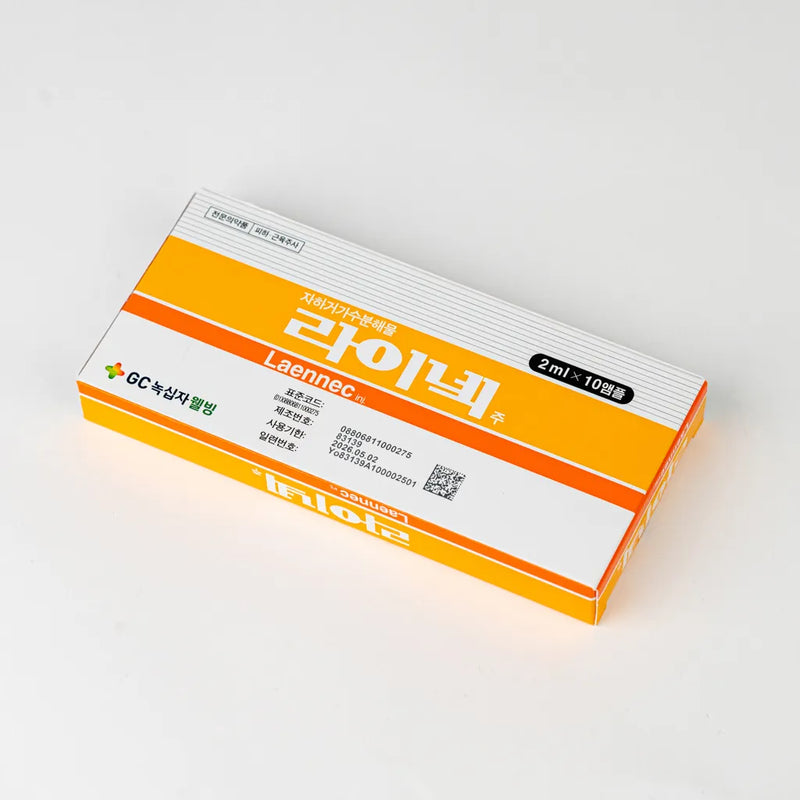
LAENNEC injection is a human placenta hydrolysate, recorded in Korean as 자하거가수분해물, licensed in Korea as a prescription-only medicine. Two currently valid filings carry the injection, both held by GC Wellbeing, and neither names a contract manufacturer, which means the licence holder makes the product itself.
| Licensed product name | English name on file | Granted | Container | Pack units |
|---|---|---|---|---|
| 라이넥주(자하거가수분해물)(수출명: LAENNEC INJ.) | Laennec Inj. | 13 April 2005 | Brown ampoule, 2mL | 10 or 50 per box |
| 라이넥주바이알(자하거가수분해물) | Lainec Inj. Vial | 23 February 2011 | Brown vial, 2mL | 10 per box |
The rest of the two records is closely matched. Both describe a pale yellow-brown to yellow-brown clear liquid. Both give a shelf life of 36 months from the date of manufacture. Both specify a light-resistant sealed container at room temperature, 1 to 30°C. Each lists ten registered barcodes.
The records also describe the declared content in an unusual way. Where many injectables declare a milligram amount of an active substance, both LAENNEC filings describe the active by volume: each millilitre contains one millilitre of placenta hydrolysate, with the detailed specification held separately by the regulator. In other words, the licence treats the hydrolysate solution itself as the active ingredient rather than stating a weight of any component within it. That matters when you compare figures, and we come back to it below.
How placenta injectables in general divide in the Korean register, including the difference between hydrolysate and extract products and the classifications they fall under, is covered in reading a placenta injectable. This piece stays with LAENNEC itself.
Two licences, one product line: ampoule and vial
The first thing to understand about LAENNEC is that the ampoule and the vial are not two pack sizes of one licence. They are two separate licences, granted six years apart.
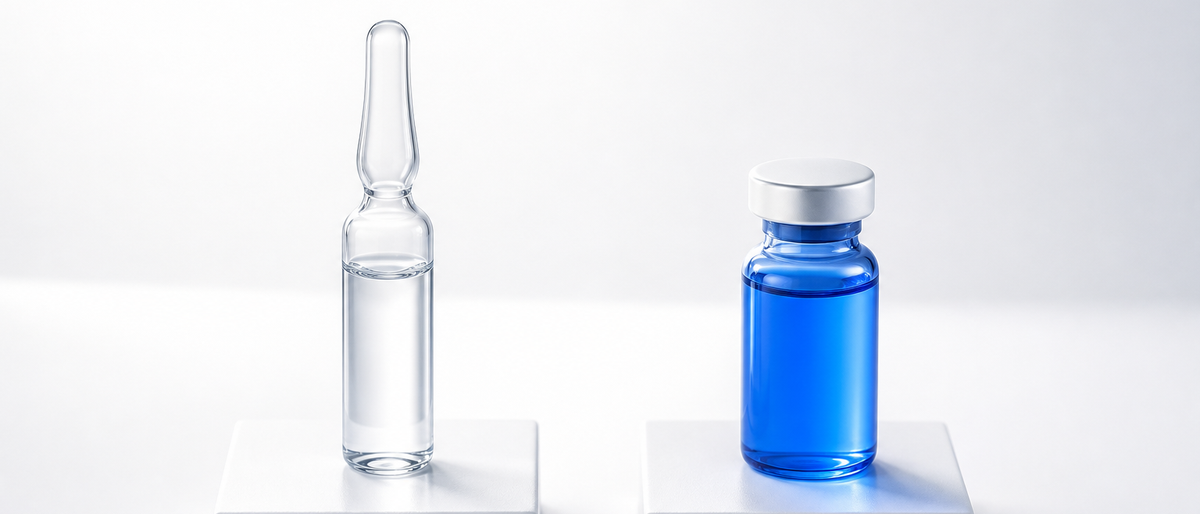
The ampoule filing, granted in 2005, is the original. The vial filing followed in 2011. They share a licence holder, a declared active, a shelf life and storage conditions. The ampoule licence lists boxes of 10 or 50, the vial licence boxes of 10 only. But they are distinct licensed products, each with its own product name, its own English name on file and its own set of barcodes.
For sourcing, this means two things. First, an order should specify ampoule or vial, not just LAENNEC. A supplier who treats them as interchangeable is substituting one licensed product for another, even if the contents are described in the same terms. Second, the checks below should be run against the licence that matches the container in the box. A vial carton should match the vial licence, and its barcode should appear in the vial licence's barcode list, not the ampoule's.
The names on the licences
The ampoule filing carries a recorded export name, LAENNEC INJ., in capitals, inside its Korean product name. Its English name on file is Laennec Inj. The vial filing carries no export name, and its English name on file is spelled Lainec Inj. Vial, a different spelling from the ampoule's. Neither spelling is an error in the sense of a counterfeit signal; they are what the licence records contain. But a buyer searching the register or a document by the Laennec spelling alone may miss the vial filing entirely.
The ampoule licence has also been renamed over its life. Its change log records product name changes in 2005, 2010 and 2016. An older carton or document may therefore carry a slightly different product name from today's, without being a different product. Identifying the product by its licence, its container and its registered barcode is steadier than identifying it by the exact wording of a name that has changed three times.
Other products that share the name
A search of the Korean drug register for the name returns an oral placenta hydrolysate product licensed for export only to a different company, Pharma Research. Its Korean product name is 라에넥피오, and its recorded export name is Laennec PO. It is currently valid. GC Wellbeing also held two export-only oral filings under the 라이넥피오 name, one a capsule and one a tablet, both granted in 2014 and both since withdrawn.
So a product described as Laennec may be the injection held by GC Wellbeing, or an oral export product held by another company. They are different licensed products, in different dosage forms, from different licence holders. A buyer looking for the injection should expect GC Wellbeing as the licence holder and an ampoule or vial as the container. Anything described as Laennec in capsule, tablet or other oral form is not the injectable product this piece describes.
Reading figures you may see quoted
Because both LAENNEC licences describe the active by volume rather than by weight, milligram figures quoted for LAENNEC do not correspond to anything in the licence record. Product listings, including in some cases our own product information, may quote a milligram amount of hydrolysate per ampoule. That figure is not stated in the licence, which records one millilitre of hydrolysate per millilitre of product and holds the detailed specification separately.
If you need to compare LAENNEC with another placenta product, compare the things both licences actually state. Start with the declared substance, because hydrolysate and extract are different entries in the register and a comparison across them is a comparison of different materials. Then compare the volume per unit and the number of units per box, which together give the total volume you are buying. Then compare the licensed shelf life and storage, which tell you how the product has to be handled and how long it can be held. Those four fields are published, stable and checkable against a carton. A milligram figure that appears on one listing and not in any licence is none of those things, and it should not be the number a purchasing decision turns on.
Where LAENNEC sits among Korean placenta injectables
Reading LAENNEC against the rest of its category makes its record easier to interpret. We read the detailed records for every currently valid Korean injectable filing indexed under human placenta: 26 filings, held by 22 different companies.
| Field | LAENNEC (both licences) | All 26 placenta injectable filings |
|---|---|---|
| Declared substance | Placenta hydrolysate | 2 hydrolysate, both LAENNEC; the rest placenta extract |
| Licensed shelf life | 36 months | 11 state 36 months, 14 state 24 months, 1 states both |
| Made by the licence holder | Yes | 13 of 26; the other 13 name a contract manufacturer |
| Light-resistant container | Yes | 23 of 26 |
| Granted | 2005 and 2011 | 2003 to 2022; only 2 granted before 2005 |
Three things stand out. First, LAENNEC is the only placenta hydrolysate injection in the Korean register. Every other injectable placenta licence declares an extract, so the two LAENNEC filings are in a group of their own, and GC Wellbeing is the only company holding an injectable hydrolysate licence. Our placenta piece describes that split between hydrolysate and extract in more detail.
Second, LAENNEC's licensed shelf life of 36 months is the longer of the two terms common in this group. More placenta filings state 24 months than 36. That is a licensing fact about each product, not a measure of quality, but it matters when checking dates: a LAENNEC carton can legitimately show a longer span between manufacture and expiry than many other placenta products.
Third, LAENNEC is made by its licence holder in a category where half of the licences are made under contract, most of them by a single specialist plant. That changes which company names a buyer should expect to see on LAENNEC documentation: GC Wellbeing as both licence holder and maker, and no second company.
How LAENNEC's licences have changed
Both LAENNEC licences have been revised since they were granted. The ampoule licence's log records changes to the product name in 2005, 2010 and 2016, to storage and period of use in 2007, 2008, 2012 and 2013, and to precautions in 2011. Both the ampoule and vial licences show revisions to indications, dosage and precautions on the same date in September 2017, and the vial licence shows a revision to storage and period of use in 2013.
The open record states which sections changed and when, not what they said before. For a buyer, the practical use of the log is dating. A carton made before a revision may carry product information that differs from today's licence text in the revised section, and the revision date explains it. The most recent revisions to either licence are from 2017, so any LAENNEC carton made in recent years should match the current text.
How to verify LAENNEC before it ships
Confirm the container and the licence. Ampoule or vial. Each is its own licence, and the carton should name the product that matches its container.
Confirm the licence holder. Both injectable LAENNEC licences are held by GC Wellbeing, which also makes the product. A carton or document presenting another company as the licence holder for LAENNEC injection is describing a different product.
Confirm the presentation. 2mL per ampoule or vial, in a brown container, with 10 or 50 ampoules per box or 10 vials per box. A different volume, or a pack size the licence for that container does not list, does not correspond to either licence.
Check the barcode against the right licence. Each LAENNEC licence lists ten registered barcodes, and no code is shared between them. The product code on the carton should appear in the list for the licence that matches its container.
Rule out the oral products. If a product described as Laennec is a capsule, tablet or other oral form, it is not the injection, and it is likely to be a different company's export product.
Check the dates. The period between manufacture and expiry printed on the carton should not exceed the 36 months both licences allow.
Sourcing LAENNEC
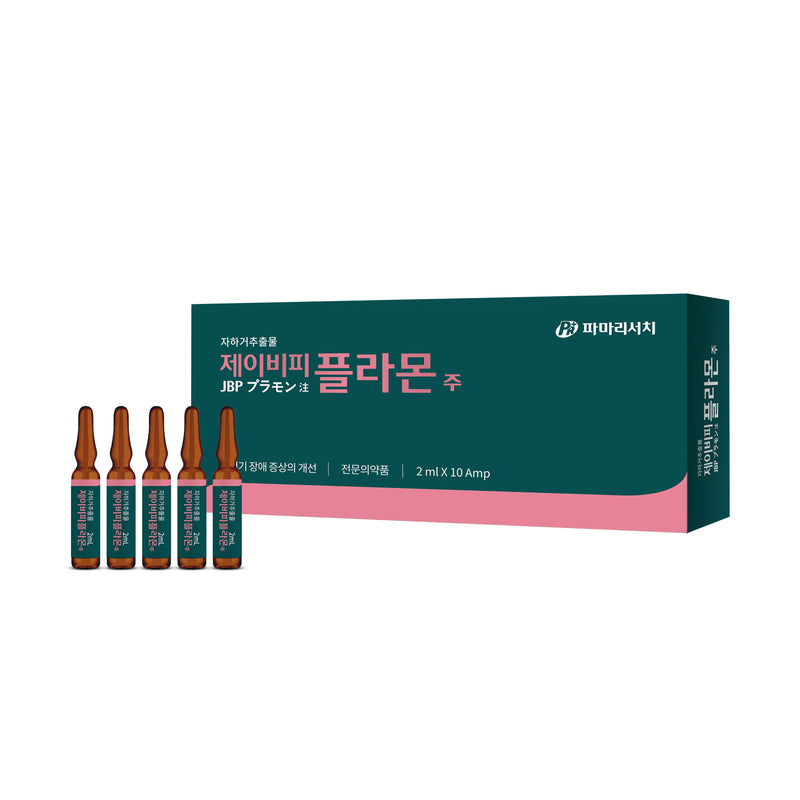
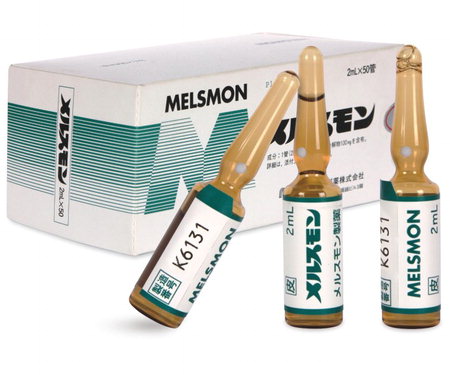
KSTATION supplies LAENNEC Inj in the ampoule presentation through official Korean channels. For buyers comparing placenta injectables more widely, JBP PLAMON and MELSMON are listed alongside it under vitamins and injectables. Both are placenta extract products rather than hydrolysates, and how the Korean register separates those two groups is covered in our placenta piece linked above. Why placenta injectables of both kinds go through the full licensing route rather than notification is set out in licensed or notified: Korea's drug filing routes. Our delivery terms, including the duties-paid option on United States orders, are on the shipping options page.
Frequently asked
What is LAENNEC injection?
A human placenta hydrolysate injection licensed in Korea as a prescription-only medicine. It is held and made by GC Wellbeing under two licences, one for 2mL brown ampoules granted in 2005 and one for 2mL brown vials granted in 2011. The ampoule licence lists boxes of 10 or 50, the vial licence boxes of 10.
What is the difference between LAENNEC ampoules and vials?
They are separate licences. The ampoule licence dates from 2005 and carries the export name LAENNEC INJ. The vial licence dates from 2011, carries no export name and is recorded in English as Lainec Inj. Vial. Both declare the same active, the same 36 month shelf life and the same storage conditions, and each has its own registered barcodes.
Is Laennec PO the same product as LAENNEC injection?
No. Laennec PO is the recorded export name of an oral placenta hydrolysate product licensed for export only to a different company, Pharma Research. It is a different licensed product in a different dosage form from the GC Wellbeing injection.
Is LAENNEC the only placenta hydrolysate injection in Korea?
Among currently valid Korean injectable placenta licences, yes. Of 26 filings, the two LAENNEC licences held by GC Wellbeing are the only ones declaring placenta hydrolysate. The rest declare placenta extract.
Sources and references
- Ministry of Food and Drug Safety (MFDS), Korean drug product licence register, product name queries 라이넥 (5 filings) and 라에넥 (1 filing), with detailed records for both LAENNEC injection licences including declared content, dosage form, pack units, storage, shelf life, barcodes and change history, retrieved 18 September 2026.
- KSTATION product information for LAENNEC Inj, as listed on our product page, read 18 September 2026.
- KSTATION editorial policy, on how register facts are separated from product claims in our writing.
Register figures are a reading taken on 18 September 2026. This article describes licence records, product identity and sourcing checks. It does not describe indications, dosage, administration or results.