Korean medicine paperwork sometimes carries a nine-digit number that is not a licence number, not a lot number and not a barcode. It is an EDI code, the product code used in Korea's health insurance claims, and the drug register records it for some licences and not others. Only six of Korea's 59 valid botulinum toxin licences carry one. In every filing we checked, all 35 of them, the nine digits turned out to be sitting inside one of the product's registered barcodes.
What an EDI code is on a Korean medicine
EDI stands for electronic data interchange, the channel through which Korean hospitals and pharmacies submit claims to the national health insurance review agency. A medicine billed through that channel is identified by a nine-digit product code. Since 2010 that code has been aligned with the Korean drug standard code, the thirteen-digit number printed as the barcode: claims use nine of the thirteen digits and drop the three-digit country prefix and the final check digit.
The MFDS drug register has a field for it, EDI_CODE, alongside the licence holder, the ingredient and the other list-level fields. For most of the injectables a professional buyer handles, the field is empty. Where it is filled, it gives a second, shorter identifier that can be checked against the register in the same way as a barcode.
How does an EDI code relate to the barcode?
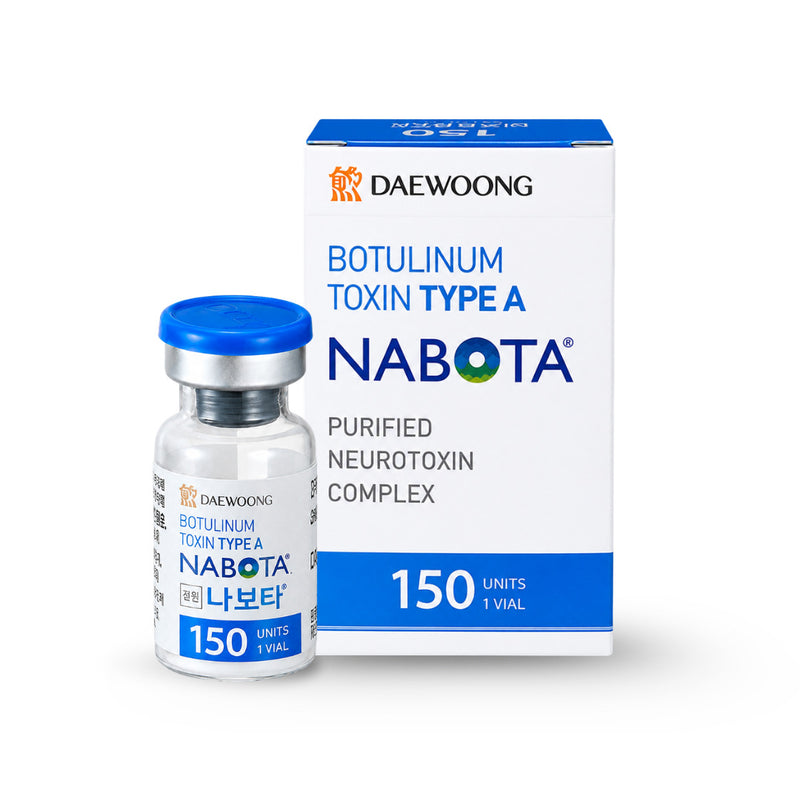
Take NABOTA 150 units, held by Daewoong Pharmaceutical. Its register entry lists one EDI code and two barcodes.
| Field | Value | Digits 4 to 12 |
|---|---|---|
| EDI code | 641606311 | Not applicable |
| Registered barcode 1 | 8806416063101 | 641606310 |
| Registered barcode 2 | 8806416063118 | 641606311, matches |
Strip 880 from the front and the check digit from the end of the second barcode, and what is left is the EDI code. The first barcode differs from it in one digit, which is consistent with how registered codes come in blocks for different packs of the same licence (the block pattern is set out in our guide to checking a carton barcode against its licence).
We ran the same comparison on every filing in our sample that carries an EDI code: 35 valid prescription injectable licences across botulinum toxins, vitamin C, glutathione, thioctic acid, hydroxocobalamin and lidocaine. Three of them, all lidocaine injections, carry two EDI codes. All 38 codes matched digits 4 to 12 of a registered barcode on the same licence. None was left over.
Which barcode matches is not fixed. In some filings it is the first code listed, in others the second, fifth or later. So the check is "one of the registered barcodes contains these nine digits," not "the first barcode does."
Which Korean botulinum toxins have an EDI code?
Of 59 valid botulinum toxin licences, six carry an EDI code, and in three cases it is attached to one strength of a brand rather than the brand as a whole.
| Licence | Holder | EDI code |
|---|---|---|
| Dysport (디스포트주) | Ipsen Korea | 681400011 |
| Botox (보톡스주) | AbbVie Korea | 624900421 |
| Meditoxin 200 units | Medytox | 675500021 |
| Botulax 150 units | Hugel | 694100041 |
| NABOTA 150 units | Daewoong Pharmaceutical | 641606311 |
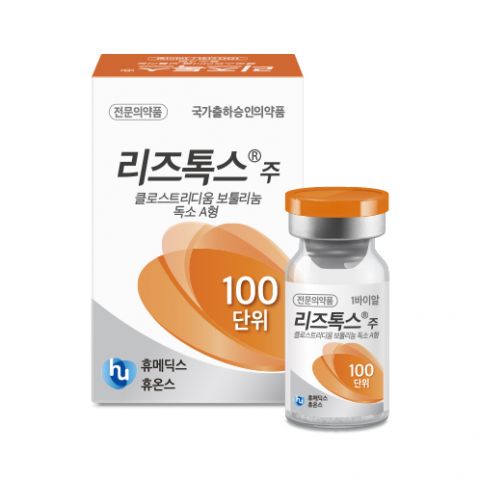
| LIZTOX 100 units | Huons BioPharma | 054600012 |
NABOTA's 100 and 200 unit licences carry no code; its 150 unit licence does. Botulax 150 has one; Botulax 100 and 200 do not. The same is true of Meditoxin 200 against Meditoxin 100. So the presence of a code says something about a particular licence, not about a brand, and a buyer comparing paperwork needs to know which strength they are looking at. How the NABOTA and LIZTOX filings differ in other fields is covered in LIZTOX vs NABOTA, filing by filing.
How often the field is filled outside botulinum toxin
The pattern is similar across the injectable groups that make up much of a Korean aesthetic catalogue: the field is filled for a minority of licences, and older filings are common among them.
| Ingredient | Valid injectable licences | With an EDI code |
|---|---|---|
| Botulinum toxin | 59 | 6 |
| Ascorbic acid (vitamin C) | 46 | 9 |
| Glutathione | 38 | 1 |
| Thioctic acid | 29 | 1 |
| Placenta | 26 | 0 |
| Hydroxocobalamin | 12 | 2 |
The single glutathione licence with a code is Tathion vial from Dong-A ST, and the single thioctic acid licence is Bukwang's Thioctacid. Of the 37 other glutathione licences and 28 other thioctic acid licences, none carries one. All nine vitamin C licences that do were first granted between 1969 and 2004.
Does a missing EDI code mean a Korean medicine is not licensed?
No. An EDI code belongs to the insurance claims system, and the register does not say why a given licence has one or does not. Every licence in the tables above is valid whether the field is filled or not, and 53 of the 59 botulinum toxin licences, including several of the most traded brands, have no code at all.
The useful reading is narrower. If a document shows an EDI code, it should belong to the licence the product claims to be. If it does not appear in that licence's EDI field, or its nine digits are not found inside any of that licence's registered barcodes, the paperwork and the product are not describing the same filing.
Using an EDI code to check paperwork
Identify the licence first. Read the Korean product name and strength from the carton. Strength is part of the licence: NABOTA 150 units and NABOTA 100 units are separate licences, and only one has a code.
Compare the nine digits with the barcodes. Take the carton barcode, remove 880 at the start and the last digit at the end. If the licence has an EDI code, the result should equal it for one of the registered barcodes.
Treat a mismatch as a question, not a verdict. A carton can carry a different registered barcode from the block than the one that matches the EDI code. That is normal. A code that matches no registered barcode at all is not.
Remember what a match proves. Like a barcode, an EDI code identifies a licence. It can be copied. A matching code shows that the paperwork points at the right filing; it says nothing about storage, handling or where a particular vial has been. Why a consumer barcode app returns nothing for these codes is explained in our question on blank barcode scans.
EDI codes across our botulinum toxin range
Two of the six coded licences are in KSTATION's range: LIZTOX 100 units and NABOTA 150 units. The other LIZTOX and NABOTA strengths we carry are licences without a code, and are checked by barcode and licence name as usual. The full range sits under botulinum toxins.
Frequently asked
What is an EDI code on a Korean medicine?
It is the nine-digit product code used when a medicine is claimed through Korea's health insurance system. The MFDS drug register records it in a field called EDI_CODE, which is filled for some licences and empty for most aesthetic injectables.
How does an EDI code relate to the barcode?
In all 35 licences we checked, the EDI code equals digits 4 to 12 of one of the licence's registered thirteen-digit barcodes, that is, the barcode without its 880 prefix and final check digit.
Which Korean botulinum toxins have an EDI code?
Six of 59 valid licences: Dysport, Botox, Meditoxin 200 units, Botulax 150 units, NABOTA 150 units and LIZTOX 100 units, as read on 15 October 2026.
Sources and references
- Ministry of Food and Drug Safety (MFDS), Korean drug product register, list records including the EDI_CODE field for botulinum toxin, ascorbic acid, glutathione, thioctic acid, placenta, hydroxocobalamin and lidocaine filings, retrieved 15 October 2026.
- MFDS drug product register, detailed records including registered barcodes for the 35 valid injectable licences carrying an EDI code, retrieved 15 October 2026.
- Daily Pharm, report on the alignment of drug EDI codes with KD codes for insurance claims (Korean).
- KSTATION editorial policy, on how product and register facts are separated in our writing.
Register figures are a reading taken on 15 October 2026. Licences and their records change without notice. This article describes identifiers recorded in the Korean register for professional buyers. It says nothing about insurance coverage, indications or how any product is used.