Line up a dozen products sold under the same three words and read only their ingredient declarations, and the category stops looking like a category. Some hold phosphatidylcholine paired with a bile salt. Some hold the bile salt and no phosphatidylcholine at all. Some hold neither, and are built instead on carnitine or a plant extract. They share a shelf, a price band, and a phrase, and almost nothing else. This piece is about reading the vial rather than the phrase.
A note on scope before anything else, because in this category scope is the whole discipline. What follows describes composition, format, and regulatory position. It does not describe what any of these materials does in tissue, does not compare products by outcome, and is not a guide to selecting or administering anything. Those are clinical and regulatory questions with real weight attached, and the answer to them is a qualified professional and the relevant authority, not an article. What an article can do is make the label legible, and the label is where the differences actually live.
One phrase, at least four compositions
The starting problem is linguistic. "Lipolytic," "fat-dissolving," and "PPC" get used interchangeably in listings, price lists, and conversation, as though they named a single material. They do not. Reading the declarations across a working Korean range, the products separate into distinct composition families that happen to share a category name.
| Family | What the declaration shows | What to notice |
|---|---|---|
| PPC with a bile salt | Phosphatidylcholine plus sodium deoxycholate, often with L-carnitine | Two actives, not one. The bile salt is declared in its own right |
| Bile salt alone | Deoxycholic acid, no phosphatidylcholine declared | This is the family with a defined approval story elsewhere |
| PPC without a declared bile salt | Phosphatidylcholine, sometimes with carnitine or a plant extract | Absence in a declaration is not proof of absence in the vial; ask |
| Neither | L-carnitine, artichoke extract, centella, caffeine and similar | Sold in the same category, built on entirely different materials |
That last row deserves emphasis because it is the one most likely to surprise a buyer. A product can sit in the contouring aisle, carry the same visual language as its neighbors, and contain no phosphatidylcholine and no bile salt whatsoever. Nothing about that is illegitimate. It is simply a different product wearing the same category label, and the only way to know is to read the declaration rather than the shelf.
What a listing can and cannot tell you
One caveat belongs here rather than in a footnote, because it governs how much weight the table above can carry. What is compared there is what each product declares in its listing, and a listing is a commercial document rather than a certificate of analysis. An active that is not named in a listing is not thereby proven absent from the vial, and an amount that is not published is not thereby unimportant. The honest reading of a sparse declaration is that it raises a question, not that it settles one.
That distinction matters most in exactly the direction a buyer least expects. A thorough declaration is easy to read and easy to verify against the manufacturer's own documentation. A thin one is not evidence of a thin formulation; it is evidence that the composition has to be established some other way, by asking the manufacturer or the licensed distributor for the specification rather than by inferring it from the marketing. Where that request cannot be answered, that itself is the answer a sourcing decision should be built on.
Why phosphatidylcholine and a bile salt travel together
The pairing that shows up most often is not a coincidence or a marketing bundle. Phosphatidylcholine is a phospholipid with poor water solubility, and bile salts are the classic solubilizing agents for exactly that problem. In the historical formulations, phosphatidylcholine was combined with deoxycholic acid, and the relationship between the two was originally that of active and solvent rather than two equal partners.1
What complicates the picture, and what is worth getting right because it is routinely muddled, is which of the two turned out to be doing the work. In the development history that produced the approved product in this space, deoxycholic acid was identified as the bioactive component of the combination, and the approved formulation that emerged centers on deoxycholic acid rather than on phosphatidylcholine.1 The solvent, in other words, is not the part that carried the approval.
For a buyer, the practical consequence is that "PPC product" is not a specification. It is a name that may or may not describe the whole of what is in the vial, and the declaration is where the rest of the answer sits. This is not an argument that one family is better than another, which would be a claim this article does not make. It is an argument that they are different objects and should be compared as different objects.
What to read on the declaration
Once the family is established, the reading narrows to a handful of specifics. Each is a question to ask of a product rather than a ranking of one product over another.
- Every active, named. Phosphatidylcholine, sodium deoxycholate or deoxycholic acid, L-carnitine, plant extracts. A list that names one active and gestures at "and other ingredients" has not disclosed a composition.
- Amounts, not just names. Content per vial or per millilitre for each declared active. Without quantities, two products with identical ingredient lists can differ by a wide margin and nothing on the label would show it.
- Fill volume and vial count. The Korean range runs mostly to 5 mL and 10 mL vials in boxes of five or ten. Price comparisons that ignore fill volume are comparing packages, not products.
- Solution or powder. Whether the product arrives ready as a solution or requires reconstitution, and if the latter, the stated diluent and volume.
- Storage and light protection. Stated conditions for the finished product, and the after-opening interval where one is given.
- Regulatory position, stated plainly. Which authority cleared what, in which market, and for what. This is the field most often left vague, and vagueness here is itself information.
Quantities are where comparisons break
Of those, the one that most often goes unread is the second. A declaration listing phosphatidylcholine and sodium deoxycholate tells you the family; it does not tell you the concentration of either, and concentration is precisely what differs between products that otherwise read identically. Two vials of the same volume, from the same category, with the same two actives named, are not interchangeable units for purchasing purposes unless the amounts match. When the amounts are not published, the honest description of the situation is that the comparison cannot be made, rather than that the products are equivalent.
Carnitine, artichoke, centella, caffeine
The secondary materials that appear across these declarations are worth naming, because a buyer will meet them and because they are frequently skipped over as filler. L-carnitine is an amino-acid derivative. Artichoke and centella are plant extracts. Caffeine is caffeine. Whatever role a formulator intends for each, the relevant fact for reading a label is that they are distinct declared components, they are not phosphatidylcholine, and their presence changes what the product is. A vial built on carnitine and a plant extract is a different object from one built on a phospholipid and a bile salt, and the category name does not distinguish them.
Format: what the Korean range actually looks like
Format is the least ambiguous part of the reading and a useful anchor. These products arrive overwhelmingly as clear solutions in glass vials rather than as powders for reconstitution, typically 5 mL or 10 mL per vial, boxed in fives or tens, and intended for administration by trained professionals. That format has a practical consequence: unlike the lyophilized antioxidants and biostimulators elsewhere in the K-derma catalog, where reconstitution is a variable to read, a lipolytic vial is what it is on arrival, and the variables that remain are composition, quantity, and provenance.
Ready-solution format also means the questions that dominate the fragile categories, hydration time, powder handling, immediate-use windows after reconstitution, mostly do not apply here. In their place, the storage line on the carton and the integrity of the chain that delivered it carry the weight. The reading discipline for a category like injectable vitamin C is instructive as a contrast: there, the format itself is a stability answer. Here, the format is simple and the composition is the complicated part.
Reading across a price list
The practical test of all this is the moment three products sit side by side at a similar price and a decision has to be made. The instinct is to compare the numbers that are visible: millilitres, vial count, price. The more useful sequence runs in the other order. Establish the composition family first, because two products in different families are not competing offers so much as different purchases. Then compare quantities within a family, where a comparison is actually meaningful. Only then does price per unit describe anything real.
Running it that way tends to shrink a long list quickly, and the shrinkage is the point. A list of a dozen products often resolves into three or four genuinely comparable groups plus a set of items that were never in the same conversation. It also surfaces the products whose declarations are too sparse to place, which is useful information in its own right rather than a dead end: those are the ones to send a specification request on before, not after, a purchase decision.
Where the regulatory line sits
Composition and regulatory status are linked in this category in a way that is unusual, and the link runs through the bile salt. Deoxycholic acid is the material with a documented approval story: a synthetic deoxycholic acid injection was approved in the United States in 2015 for submental fat, the area under the chin, and that approval is narrow by design. The approved labeling states the product is indicated for the submental area and has not been established as safe or effective for treatment outside that region.23
Two things follow, and both are easy to get wrong. First, an approval attached to one product in one market for one area is not a status that spreads to every product containing a related material. Second, phosphatidylcholine formulations do not inherit that approval; they occupy a different and more variable regulatory position depending on the market. The full map of that divergence is set out in fat-dissolving injectables and the regulatory line, which is the companion to this piece and the one to read for status rather than composition.
There is also a formulation-side reality worth naming plainly: preparations in this space are frequently compounded rather than manufactured as approved products, and compounded drug products are not FDA-approved, meaning they have not undergone premarket review for safety, effectiveness, and quality.4 That is a statement about regulatory pathway, not about quality in the colloquial sense, and it is one of the reasons composition disclosure carries more weight here than in categories where an approved reference product defines the norm.
How KSTATION reads these products
For a category this heterogeneous, sourcing discipline starts earlier than usual: not at whether a product is genuine, but at what the product is. Manufacturer and licensing details are checked against MFDS records before a product is listed, and composition is read from the manufacturer's own documentation rather than inferred from the category name or the brand. We stock officially sourced products only, and the method is set out in our Editorial & Sourcing Policy.
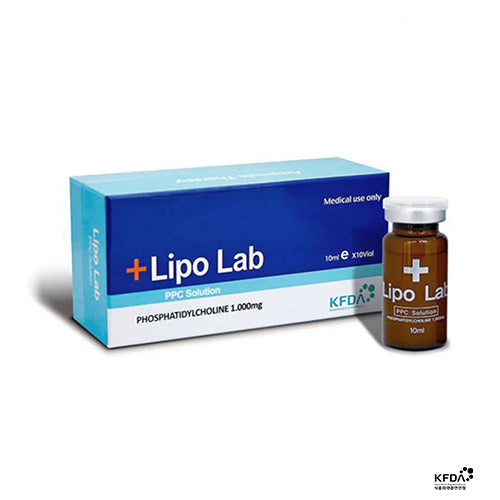
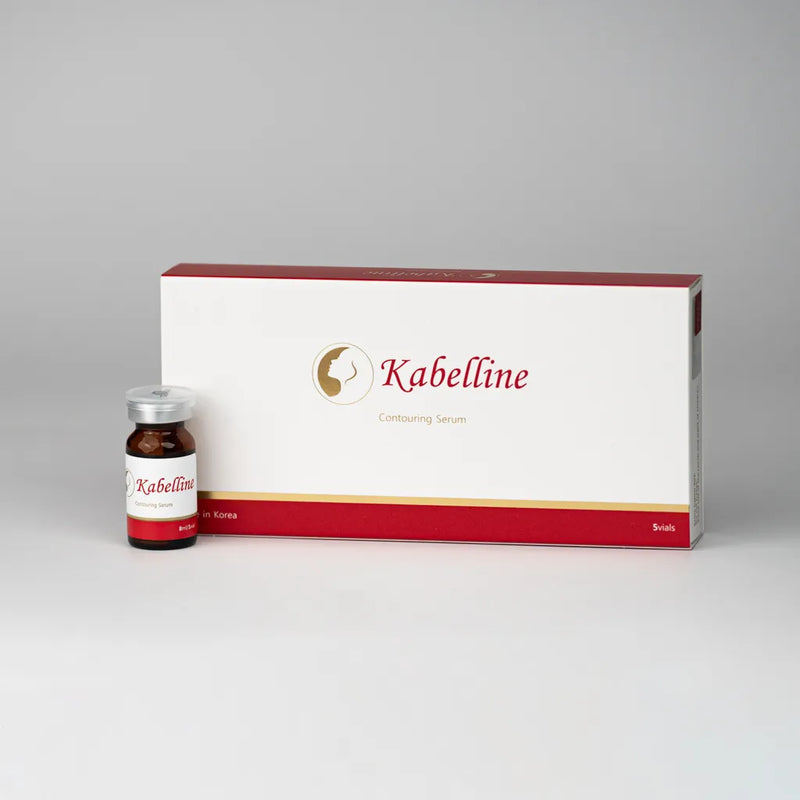
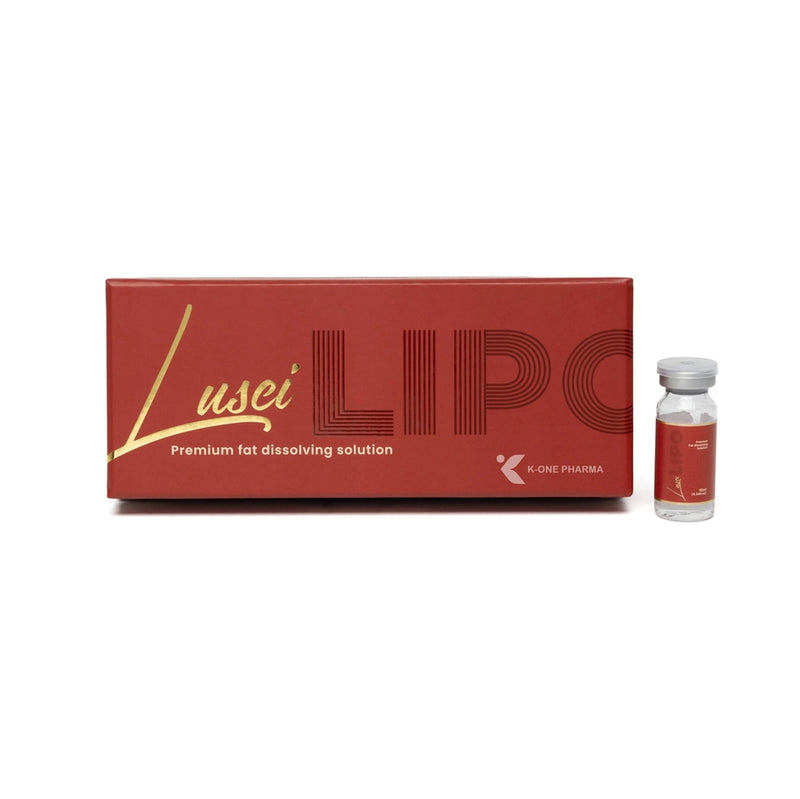
The lines in our range make the spread visible. Products such as Lipo Lab PPC Solution declare phosphatidylcholine alongside a bile salt; KABELLINE sits in the deoxycholic-acid family; LusciLIPO declares phosphatidylcholine without a bile salt in its listing. Read as a group they are one shelf; read as declarations they are three different readings. The fuller range sits under contouring and lipolysis, and the product-level authenticity checks that apply across injectables are in our guide to what a counterfeit injectable actually costs.
Frequently asked questions
Frequently asked
Do all fat-dissolving injectables contain phosphatidylcholine?
No. Reading declarations across a working Korean range, the products separate into several composition families: phosphatidylcholine with a bile salt, deoxycholic acid without phosphatidylcholine, phosphatidylcholine without a declared bile salt, and products built on entirely different materials such as L-carnitine or plant extracts. The category name does not tell you which one you are holding.
Why is sodium deoxycholate in a PPC solution?
Phosphatidylcholine is a poorly water-soluble phospholipid, and bile salts are the classic solubilizing agents for that problem. In the historical formulations the two were combined with deoxycholic acid acting as the solvent, and in the development history that produced the approved product in this space, deoxycholic acid was identified as the bioactive component while phosphatidylcholine was removed from the approved formula.
Can I compare two lipolytic products by price per millilitre?
Only if their declared compositions and quantities match, which frequently they do not. Two vials of the same fill volume can differ in which actives they contain and in how much of each, so a price-per-millilitre comparison across different composition families is comparing unlike things. Where amounts are not published, the comparison cannot be made rather than the products being equivalent.
Is the FDA approval for deoxycholic acid a general approval for fat dissolving?
No. The 2015 US approval covers a specific synthetic deoxycholic acid injection for submental fat, the area under the chin, and the approved labeling states it has not been established as safe or effective for treatment outside that region. An approval for one product, one market, and one area does not extend to other products or other areas.
What should I ask if the composition is not published?
Ask the manufacturer or the licensed distributor for the product specification: every declared active by name, the amount of each per vial or per millilitre, the fill volume, the storage conditions for the finished product, and the regulatory position stated by market. Those are ordinary questions that a licensed supplier can answer from its own documentation. A request that cannot be answered is itself a result, and it belongs in the sourcing decision rather than outside it.
Disclaimer. This article is general educational information and is not medical advice. It describes how products in this category are composed, formatted, and regulated; it makes no claim about what any product does, achieves, or is suitable for, and it is not a selection, preparation, or administration guide. Products referenced are intended for professional use by trained practitioners. Regulatory status varies by country and changes over time; confirm current requirements with the relevant authority.
Sources & references
- The Role of Fat Reducing Agents on Adipocyte Death and Adipose Tissue Inflammation (phosphatidylcholine originally combined with deoxycholic acid as solvent; deoxycholic acid identified as the bioactive component; PPC removed from the approved formula). ncbi.nlm.nih.gov
- Kybella (deoxycholic acid) FDA approval history: synthetic deoxycholic acid injection approved in 2015 for submental fat. drugs.com
- U.S. FDA, KYBELLA (deoxycholic acid) injection prescribing information: indicated for submental fat; not established as safe or effective outside the submental region. accessdata.fda.gov
- U.S. FDA, Compounding and the FDA: Questions and Answers: compounded drug products are not FDA-approved and have not undergone premarket review. fda.gov