Verification is easiest where an approved reference product exists. You look up the label, compare what is in front of you against it, and the gaps show. Lipolytics are the category where that shortcut is least available: composition is often undisclosed, regulatory status varies by market and by formulation, and a large share of what circulates is compounded rather than manufactured to an approved specification. The verification job does not disappear. It just has to be built out of other checkable facts.
This piece sets out those facts and the order to check them in. It stays on provenance, licensing, and disclosure, and it makes no claim about what any product in this category does or is suitable for. Those are clinical and regulatory questions that belong with a qualified professional and the relevant authority.
Why this category is harder to verify
Three features stack up here, and each one removes a check that other categories take for granted.
The first is disclosure. In most injectable categories, the active and its quantity are stated plainly, so a mismatch between claim and content is at least visible in principle. In this one, listings frequently name a headline material and stop. As we set out in reading a lipolytic ampoule, products sold under a single phrase turn out to span several different compositions, and some contain none of the material the category is named after. When the composition itself is uncertain, verification cannot start with the composition.
The second is regulatory variability. One material in this space has a defined approval story and the rest do not, which means "approved" is not a single fact you can check once and carry across the category. The map of that divergence is in fat-dissolving injectables and the regulatory line. For verification purposes the consequence is narrow and important: a claim of approval attached to a product in this category has to be checked against a specific authority, a specific product, and a specific market, or it is not a claim that can be checked at all.
The third is the compounding question. Preparations in this space are frequently compounded rather than manufactured as approved products, and compounded drug products are not FDA-approved, meaning they have not undergone premarket review for safety, effectiveness, and quality.3 That is a statement about regulatory pathway rather than a judgment about any individual preparation, but it changes what verification means. There is no approved reference labeling to compare against, so the weight shifts entirely onto who made it, under what authorization, and whether the chain to you is documented.
The chain, in the order worth checking it
Verification in this category runs cheapest to most expensive: the checks that can eliminate a product quickly come first, and the ones that require a counterparty come after.
- Manufacturer and Korean licence holder, named. A specific manufacturing site and a designated Korea licence holder, checkable against MFDS records. "Made in Korea" without a named licensed manufacturer is a country of origin claim, not a licensing fact.
- Composition, disclosed quantitatively. Every declared active by name with amounts per vial or per millilitre. In this category the request itself is diagnostic: a licensed supplier answers it from its own documentation.
- Serialization. MFDS operates a nationwide serialization system under which prescription products carry a GS1 DataMatrix code encoding the product identifier, serial number, lot, and expiry. A code that scans and resolves is a check; a code that resolves nowhere is a finding.
- Lot and expiry agreement. The lot number and expiry printed on the vial must match the carton exactly. This is the cheapest physical check and it still catches repackaging.
- Seal and packaging integrity. Intact tamper-evident seals, correct carton, no signs of relabeling or over-stickering.
- Storage terms and how they were met. Stated conditions for the finished product, and evidence the chain honored them rather than an assurance that it did.
- Documented channel. A purchase traceable to an authorized channel. Untraceable origin, or a price that has no explanation, is where a sourcing decision stops rather than where it gets negotiated.
Why the licence holder is the anchor
Of those, the one that carries the most weight in this specific category is the licence holder, and it is worth being precise about why. In categories with an approved reference product, the label anchors verification. Here there often is no such anchor, so the question becomes institutional rather than documentary: is there a licensed entity that stands behind this product in its home market, and can it be named and checked?
A named manufacturer with a designated licence holder gives you a party with something to lose and a record to check. An unnamed manufacturer behind a brand name gives you neither. That difference does not tell you what is in the vial, but it tells you whether anyone is accountable for what is in the vial, which in a category with this much formulation variability is the more load-bearing fact.
The parallel-import problem, specifically
Parallel imports are stock that reaches a market outside the authorized distribution chain. The product may be genuine in the sense of having been made by the manufacturer, and still arrive with none of the assurances that the authorized chain provides: no verified storage history, no recall reachability, and often no documentation that survives contact with a question.
This category is unusually exposed to that pattern for a structural reason. Demand is high, the regulatory position is ambiguous enough that buyers are used to ambiguity, and price dispersion is wide, which is exactly the environment in which grey-channel stock circulates comfortably. When ambiguity is the norm, an ambiguous answer about provenance does not stand out the way it would elsewhere, and that is precisely why it should be treated as disqualifying here rather than tolerated.
The failure mode is worth naming plainly because it is not the one buyers picture. The common outcome is not a dramatic counterfeit; it is genuine-but-untraceable stock whose handling history nobody can reconstruct, bought at a price that made the question feel unnecessary. The full accounting of what that costs beyond the money is in what a counterfeit injectable actually costs.
Where the check usually stalls
In practice the sequence rarely fails at the dramatic step. It stalls at a mundane one: the supplier answers every question except the composition, or produces a specification for a product family rather than for the lot in hand, or offers a certificate that names an analysis without naming who performed it. None of those is an outright refusal, and that is exactly why they slip through.
The useful habit is to treat a partial answer as an unanswered question rather than as most of an answer. A specification that does not match the lot on the carton describes a different object. An analysis without an issuing laboratory is a claim about a document rather than a document. Neither is evidence of bad faith, and both are common enough in this category to be unremarkable, but a check that accepts them has stopped being a check. Asking once more, in writing, resolves most of these in a day and is the last cheap step before a purchase becomes expensive to unwind.
What a border adds to the question
Cross-border purchase layers a second set of facts on top of the first. Customs authorities read a declaration, not a brand: composition and quantity drive classification, and vague ingredient statements create ambiguity at the exact point where ambiguity is expensive. A category where composition is often undisclosed is therefore a category where shipments are more likely to attract questions, and the mechanics of how that plays out are set out in the US customs squeeze on imported aesthetics.
There is also the plain matter of admissibility, which is decided by the destination market and not by the seller. A product properly licensed in Korea is a properly licensed Korean product; whether it may be imported, held, or used elsewhere is a separate question with a separate answer, and in this category the answer is more often restrictive than in most. Establishing that before ordering is the least expensive step in the whole sequence.
Checking an approval claim
Of all the claims attached to products in this category, the one most worth checking and least often checked is a claim of approval. It is checkable, and the check is short.
There is one approval in this space with a documented, lookup-able story. A synthetic deoxycholic acid injection was approved in the United States for submental fat, the area under the chin, and the approved labeling states plainly that it has not been established as safe or effective for treatment outside the submental region.1 That is the entire scope: one product, one market, one anatomical area. Every part of that sentence is doing work, and every part of it is routinely dropped when the approval gets cited in a listing.
The historical relationship between the two materials explains why the approval attaches where it does. Phosphatidylcholine and deoxycholic acid were combined in the early formulations with the bile acid acting as solubilizer, and in the development history that produced the approved product, deoxycholic acid was identified as the bioactive component while phosphatidylcholine was removed from the approved formula.2 A phosphatidylcholine product therefore does not inherit that approval, and no amount of category proximity transfers it.
So the check runs like this. If a supplier cites an approval, ask three questions: which authority, which specific product, and for what indication and area. A claim that survives all three is a fact you can look up yourself. A claim that dissolves at the first question was never a regulatory statement; it was a marketing sentence borrowing the shape of one. Neither outcome requires an argument, which is what makes this the cheapest check in the sequence.
Red flags, ranked by how much they should move you
Not every gap is equally serious. Ranking them keeps a check from becoming either paranoid or complacent.
| Finding | Weight | Reading |
|---|---|---|
| No named manufacturer or licence holder | Stop | Nobody is accountable for the contents; nothing downstream can be checked |
| Untraceable channel, no documentation | Stop | Storage history and recall reachability are both unavailable |
| Composition request unanswered | Stop | A licensed supplier answers this from its own file; silence is the answer |
| Code that scans to nowhere | Stop | Serialization exists precisely so this check resolves |
| Approval claimed without market or product | Investigate | Often an overreach from one narrow approval; ask which authority and which product |
| Price far below the band, unexplained | Investigate | Not proof of anything on its own, but it changes what the other checks must carry |
| Sparse listing, full spec available on request | Proceed | A commercial listing is not a specification; the specification is the document |
The distinction in the last row matters and is easy to collapse. A thin product page is a marketing decision. A supplier who cannot produce a specification when asked is a sourcing fact. Treating those as the same thing rejects legitimate products and, worse, makes the check feel performed rather than performed.
One more note on sequencing, since it is what separates a check that works from a check that merely happened. Every item above is cheap before a purchase and expensive after it. A composition request answered in a day costs nothing; the same question asked after a shipment is held costs the shipment. Front-loading the sequence is not caution for its own sake, it is simply where the leverage sits.
How KSTATION handles this category
The approach here is the same one applied across injectables, with the emphasis shifted to match where the risk sits. Manufacturer and licensing details are checked against MFDS records before a product is listed, composition is read from manufacturer documentation rather than inferred from a category name, and we stock officially sourced products only. The method is set out in our Editorial & Sourcing Policy.4
What differs in this category is the order of operations. Elsewhere the question "is this the genuine article" comes first. Here the question "what is this, exactly" comes first, because the category name does not answer it and two products on the same shelf may not be the same kind of object at all. Only once composition is established does authenticity become a well-posed question.
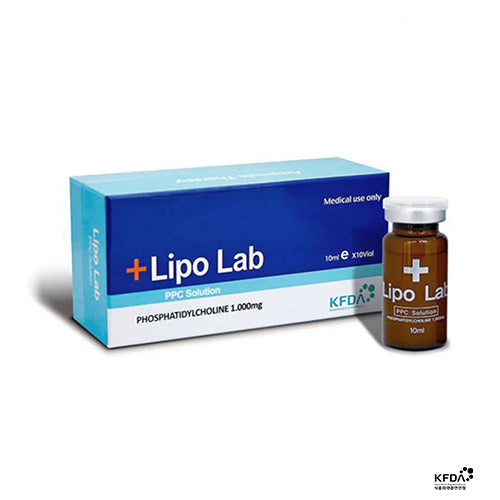
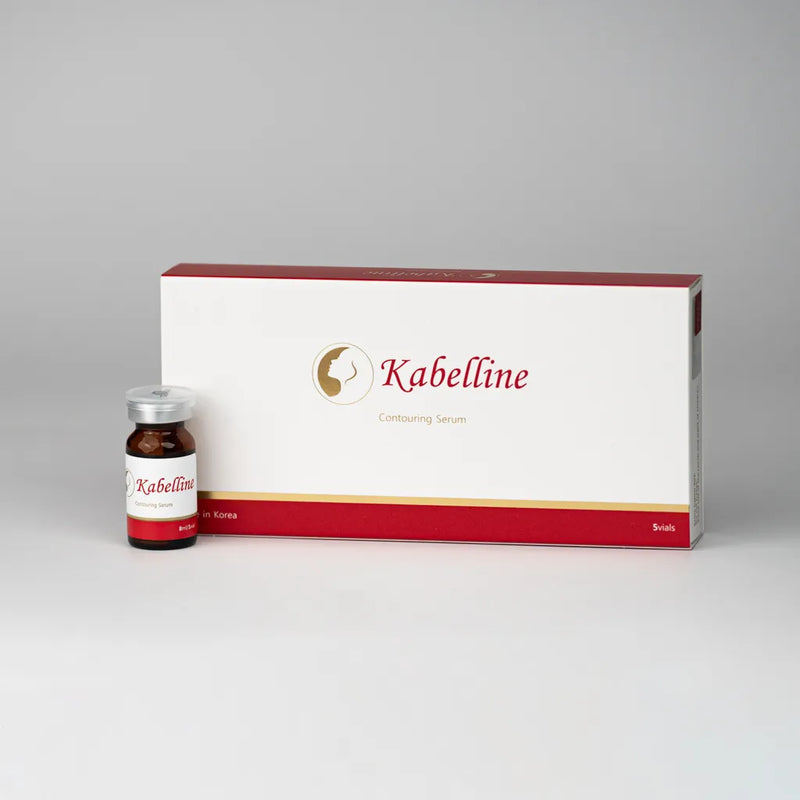
The stocked range sits under contouring and lipolysis, spanning the composition families described in the composition guide: lines such as Lipo Lab PPC Solution in the phosphatidylcholine-with-bile-salt family and KABELLINE in the deoxycholic-acid family. For the general verification method that applies across injectable categories, see our guide to verifying an authentic Korean booster.
Frequently asked questions
Frequently asked
How do I verify a Korean lipolytic is authentic?
Check the chain rather than a single feature: a named manufacturer and designated Korean licence holder checkable against MFDS records, a quantitative composition disclosure, a serialization code that resolves, lot and expiry agreement between vial and carton, intact seals, stated storage conditions with evidence they were met, and a documented purchase from an authorized channel.
Why is composition disclosure a verification issue in this category?
Because products sold under one category name span several different compositions, and some do not contain the material the category is named after. Until composition is established, authenticity is not a well-posed question: you cannot confirm a product is what it claims to be while what it claims to be remains undefined.
What is a parallel import and why does it matter here?
Parallel-imported stock reaches a market outside the authorized distribution chain. It may be genuine and still arrive without verified storage history, recall reachability, or documentation. This category is unusually exposed because high demand, ambiguous regulatory status, and wide price dispersion are the conditions grey-channel stock circulates in most comfortably.
Does a low price mean a product is not genuine?
Not on its own. An unexplained price well below the band is a prompt to investigate rather than a verdict, and it raises how much weight the other checks have to carry. The findings that should stop a purchase outright are an unnamed manufacturer, an untraceable channel, an unanswered composition request, or a serialization code that resolves nowhere.
Is a product legal to import because it is licensed in Korea?
No. Korean licensing is a fact about Korea. Whether a product may be imported, held, or used in another market is a separate question answered by that market's authority, and in this category the answer is more often restrictive. Confirm destination-market status before ordering rather than after a shipment is held.
Disclaimer. This article is general educational information and is not medical advice. It describes how products in this category are licensed, disclosed, and sourced; it makes no claim about what any product does, achieves, or is suitable for, and it is not a selection, preparation, or administration guide. Products referenced are intended for professional use by trained practitioners. Regulatory and customs requirements vary by country and change over time; confirm current requirements with the relevant authority.
Sources & references
- U.S. FDA, KYBELLA (deoxycholic acid) injection prescribing information: indicated for submental fat; not established as safe or effective outside the submental region. accessdata.fda.gov
- The Role of Fat Reducing Agents on Adipocyte Death and Adipose Tissue Inflammation (phosphatidylcholine and deoxycholic acid formulation history). ncbi.nlm.nih.gov
- U.S. FDA, Compounding and the FDA: Questions and Answers: compounded drug products are not FDA-approved and have not undergone premarket review. fda.gov
- KSTATION, Editorial & Sourcing Policy (official-channel sourcing and traceable provenance). kstations.com/pages/editorial-policy