"How much is 1 mL of filler" is one of the most common questions in this category, and it contains an assumption worth testing before answering it. The assumption is that a millilitre is the unit fillers come in, so that products can be lined up against each other by it. We swept our own filler catalogue to check. Across 49 active products, 31 state no volume at all in their product name, and the 18 that do state one split across three different units. Among the eight that use millilitres, no two declare the same number.
Forty-nine products, three units, and thirty-one that state no volume
The sweep covered every active product in our dermal filler collection on 27 August 2026, reading the declared unit out of the product name and its variants. Eight products declare millilitres. Seven declare cc. Three declare milligrams. The remaining 31 declare no quantity in the name at all, offering instead a line designation such as Fine, Deep, Sub-Q, Light, Volume or a numbered grade.
That last group is the largest by a wide margin, and it is the one that quietly breaks the comparison most people are trying to make. A product presented as REVOLAX SUB-Q or CHAEUM PREMIUM No.2 or ELASTY G is telling you about the rheology it is built for, the depth of placement it is designed around, and the position it occupies within its own family. It is not telling you how much liquid is in the box. Two products from that group can sit side by side in a quote with no volume figure attached to either.
One more framing note belongs here before the numbers go further. This is our catalogue, not a census of the Korean filler market. Forty-nine products is a real sample and the patterns in it are consistent, but a different distributor with a different product mix would produce different proportions. Read what follows as how this category labels itself in one large working catalogue, which is exactly the surface a buyer actually encounters, and not as a market statistic.
| Declared unit | Products | Values seen | Where it appears |
|---|---|---|---|
| Millilitres (mL) | 8 | 0.8, 1, 1.1, 1.2, 2, 10, 20, 60 | Face syringes and two larger body presentations |
| Cubic centimetres (cc) | 7 | 10, 60, 70, 80, 100, 120 | Body and large volume vials only |
| Milligrams (mg) | 3 | 200, 260, 520 | Powder presentations, no liquid volume |
| No quantity in the name | 31 | Line designation only | Fine, Deep, Sub-Q, Light, Volume, numbered grades |
The millilitre values do not repeat
Eight products declare millilitres, and they declare eight different numbers: 0.8, 1, 1.1, 1.2, 2, 10, 20 and 60. Not one value appears twice. That is a small sample and it would be a mistake to build a theory on it, but it is enough to retire the idea that 1 mL is the default that everything else deviates from.
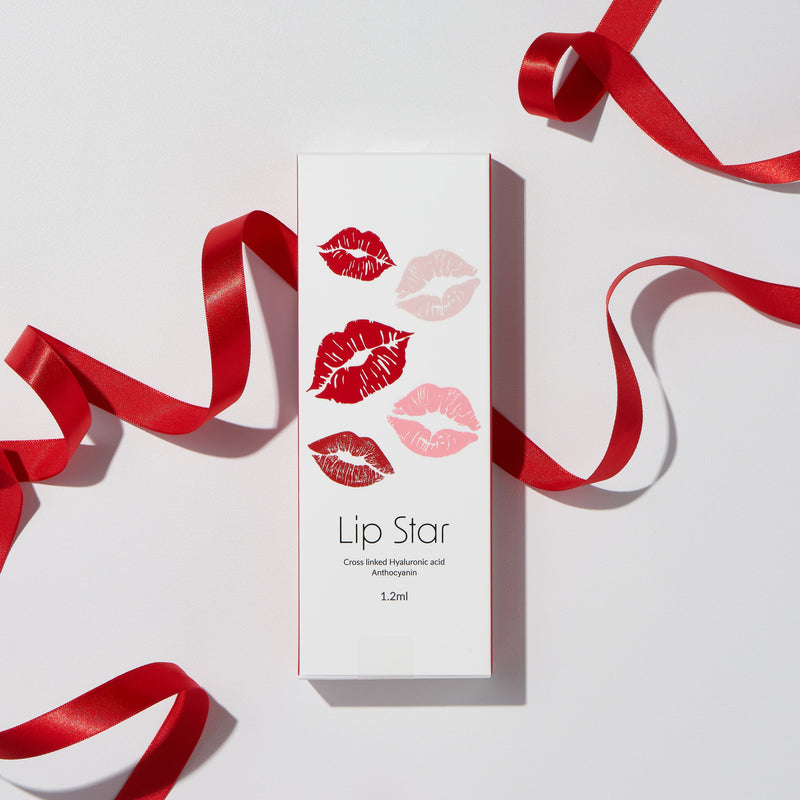
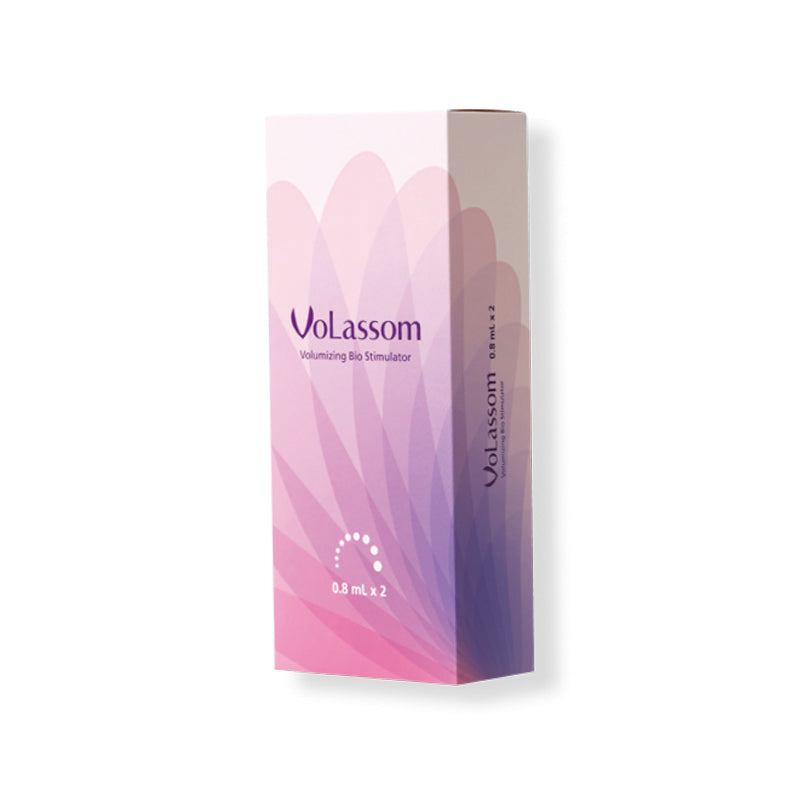
Look at the face syringes alone and the spread tightens without becoming uniform. Lip Star declares 1.2 mL in one syringe. REGENOVUE PLUS declares 1.1 mL in one syringe. REGENOVUE declares 1 mL in one syringe. VoLassom declares 0.8 mL, and it supplies two syringes rather than one. Sunnyfill PN declares 2 mL. Those five sit within a factor of two and a half of each other, which is more than enough spread to matter when a quote is being compared line by line.
The VoLassom entry is the one that repays a second look, because it is the case where reading the volume alone misleads in both directions. At 0.8 mL it declares the smallest per syringe figure in the set, and at two syringes it delivers 1.6 mL in the box, more than the 1.2 mL product beside it. A buyer scanning for the largest number per syringe and a buyer scanning for the most material in the package would pick different products from the same shelf. Per syringe volume and per package volume are separate figures and the product name often carries both, in the same string, unlabelled.
This is where the honest answer to "how much is 1 mL" has to start. It is a volume, roughly a fifth of a teaspoon, and that is the only part of the question with a fixed answer. What that volume contains varies with the product it belongs to, because the density of cross-linked gel, the concentration of hyaluronic acid and the presence of other declared components all differ between products that share the number. The related question of what cross-linking changes inside that volume has its own reading in reading an HA filler.
cc and mL measure the same thing, and the catalogue still splits them
A cubic centimetre and a millilitre are the same volume. There is no conversion to perform, no rounding difference, no context in which 1 cc holds more or less than 1 mL. So the presence of both units in one catalogue is a labelling convention rather than a measurement distinction, and the interesting question is what the convention tracks.
In this sweep it tracks scale and presentation. Every product declaring cc is a large volume item: MOMM mini Body Filler is listed at 70 cc and Rejuvafill at 100 cc. Every one of those is a vial or pack rather than a single face syringe. The millilitre products cluster at the small end, five of the eight under 2 mL, all of them syringes.
The convention is not a rule, and the exception is instructive. Voluderm 60 Body Shot declares 60 mL and Voluderm 20 declares 20 mL, both large presentations using the millilitre label that the rest of the large presentations avoid. So a buyer cannot infer presentation type from the unit with any reliability. What the unit does tell you is which labelling tradition the manufacturer was working in, and that is a weaker signal than it looks.
The practical consequence is small but real. When a supplier quotes cc and a spreadsheet is built in mL, nothing needs converting and nothing should be converted. Applying a conversion factor to a figure that is already identical is a genuine error we have seen made, and it produces a quote that is wrong by whatever factor was invented. Treat the two labels as spellings of one unit.
Inside a single brand, the quantity structure changes
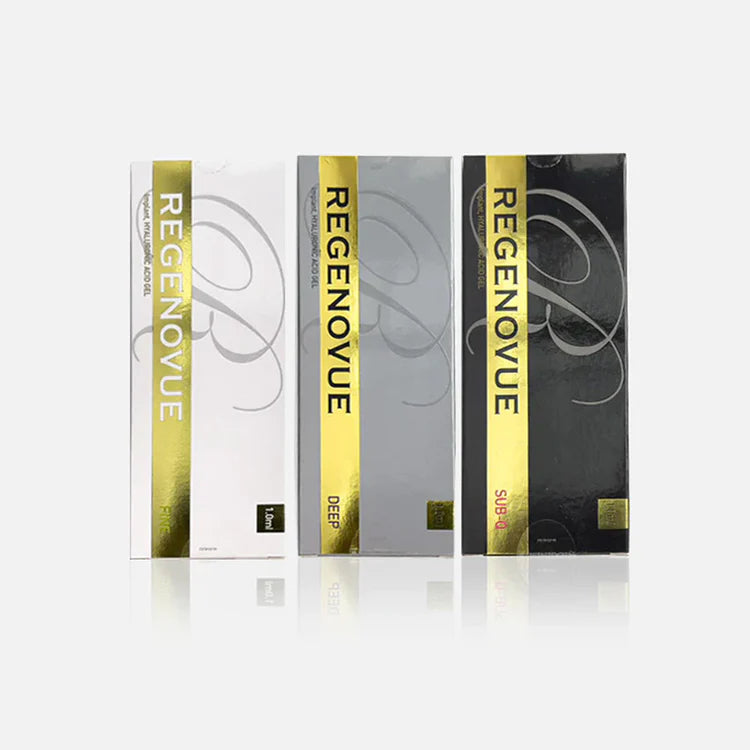
The spread across the catalogue would matter less if a brand name at least held its quantity structure steady. It does not. REGENOVUE appears three times in the active range with three different arrangements: REGENOVUE at 1 mL in one syringe, REGENOVUE PLUS at 1.1 mL in one syringe, and REGENOVUE Aqua Shine at 3 mL across three syringes. Three products, one brand, and a per package total that runs from 1 mL to 9 mL.
Sunnyfill does the same thing across a wider gap. Sunnyfill PN declares 2 mL in one syringe. Sunnyfill PN Booster declares 3 mL across ten vials, which is a package total of 30 mL. Sunnyfill PLA declares 200 mg and no volume at all, because it is a powder. Within one brand name the buyer moves from a single syringe to a ten vial pack to a lyophilised presentation, and the unit changes from millilitres to milligrams along the way.
A separate reading of this catalogue found the same pattern one level deeper, where five products under a single brand declared five different active ingredients that sit in four different places in the Korean registers. That is set out in one brand name, five products that share almost nothing. Between the two sweeps the conclusion is the same from opposite directions: in this category the brand is not the unit of anything, and the item is.
When the declared number is a mass rather than a volume
Three products in the sweep declare milligrams: SYNERFILL Body at 520 mg, SYNERFILL Face at 260 mg, and Sunnyfill PLA at 200 mg. None of them declares a volume, and that is not an omission. They are powder presentations, and a powder has no fixed liquid volume until it is reconstituted.
The distinction runs deeper than packaging. For a pre-filled gel, the quantity that matters commercially and the quantity in the syringe are the same figure, because what you buy is what is placed. For a lyophilised product, the mass in the vial is fixed and the final volume depends on how much solvent is added, so the mass is the stable number and the volume is a downstream variable. Declaring the mass is the more informative choice, and declaring a volume would be declaring something that has not been determined yet.
This is also why a milligram figure and a millilitre figure cannot be lined up in the same column of a comparison sheet, however tempting it is when both are just numbers next to a product name. Five hundred and twenty milligrams and 1.2 millilitres are quantities of different kinds. Any ranking that sorts them together is sorting on a meaningless axis, and the fact that spreadsheet software will happily do it is not an argument that it means anything.
The three mg products also sit at a category boundary worth naming. Poly-L-lactic acid and similar materials are usually discussed as biostimulators rather than as fillers even when they appear in the same collection, and the mass declaration is one of the visible markers of that difference. The distinction between the two families is set out in biostimulators versus HA fillers, and the reconstitution question specifically in reading a PLLA biostimulator.
Part of that millilitre is often lidocaine
A declared millilitre is a total volume, not a volume of the active material, and in a large part of this category some of it is occupied by an anaesthetic component. Six of our own HA filler products declare lidocaine at 0.3 percent, and lidocaine appears in product names across the category, with NEURAMIS presenting Lidocaine, Light Lidocaine and Deep Lidocaine as distinct variants of the same family.
Point three percent of a millilitre is a small fraction, and the point here is not that it displaces a meaningful quantity of gel. The point is that the same brand often sells lidocaine-containing and lidocaine-free versions under one name, distinguished only by a word in the variant title. Two line items that look identical in a quote, both 1 mL, both the same brand and grade, can be different products in this respect. That difference has regulatory weight as well as compositional weight, and it is the subject of the two regulatory paths lidocaine travels, where the same molecule is a licensed medicine in its own right at one concentration and a component inside a device at another.
What to ask instead of how much a millilitre is
The question that produces a usable answer is not how much 1 mL is but which figures a given product actually declares and where each one lives. In practice that is four separate questions, and the product name usually answers at most two of them.
Ask what the per unit quantity is and in which unit it is expressed. Ask how many units are in the package, because a name reading 0.8 mL x 2 Syringes carries two numbers that multiply. Ask whether the declared figure is a volume or a mass, since a mass tells you the presentation is a powder and that the final volume is not yet fixed. And ask which variant within the family is being supplied, because lidocaine presence and grade designation are variant level facts that a family name does not carry.
Across the KSTATION range the products discussed here sit in the dermal fillers collection, with the powder presentations shelved alongside the biostimulators. Authenticity checks are a separate axis from quantity checks and run through different evidence, which is covered in how to distinguish authentic Korean dermal fillers.
Frequently asked
How much is 1 mL of filler?
As a volume, 1 mL is about a fifth of a teaspoon, and that part is fixed. What is not fixed is the assumption behind the question, that 1 mL is the standard filler unit. In a sweep of 49 active filler products, only eight declared millilitres at all, and those eight declared eight different values: 0.8, 1, 1.1, 1.2, 2, 10, 20 and 60. Thirty-one products declared no quantity in the product name at all.
Is 1 cc the same as 1 mL of filler?
Yes, exactly the same volume, with no conversion required. In our catalogue the two labels track presentation rather than measurement: every cc product is a large volume vial or pack between 10 and 120 cc, while the millilitre products are mostly small face syringes. That correlation is a convention and not a rule, since two large body presentations use millilitres. Applying a conversion factor between cc and mL is an error that introduces a wrong number where the figures already matched.
Why are some fillers measured in mg instead of mL?
Because they are supplied as powders rather than as pre-filled gels. Three products in the sweep declare 200, 260 and 520 mg and no volume, since a lyophilised product has no fixed liquid volume until it is reconstituted. The mass is the stable figure and the volume is determined later. A milligram figure and a millilitre figure are quantities of different kinds and cannot be ranked against each other.
Do all filler syringes hold the same volume?
No. Among the face syringes in this sweep the per syringe volumes were 0.8, 1, 1.1, 1.2 and 2 mL. The 0.8 mL product supplies two syringes, so its package total of 1.6 mL exceeds that of a single 1.2 mL syringe beside it. Per syringe volume and per package volume are separate figures, and product names frequently carry both without labelling which is which.
Why do so many filler names show Fine, Deep or Sub-Q instead of a volume?
Those designations describe the rheology and intended placement depth the product is built around, which is the property that distinguishes members of one family from each other. Volume is often identical across a family, so it is not the useful discriminator in the name. Thirty-one of 49 products in this sweep carried a line designation and no quantity. The volume exists on the packaging and specification sheet; it is simply not what the catalogue name is for.
Sources & references
- KSTATION catalogue sweep, Shopify Admin API, collection
derma-fillers, all 49 ACTIVE products with variants, unit and quantity extracted from product and variant names, retrieved 2026-08-27. kstations.com - KSTATION product pages for Lip Star, REGENOVUE, REGENOVUE PLUS, VoLassom, Sunnyfill PN, SEDY FILL, MOMM mini Body Filler, Rejuvafill, Voluderm, SYNERFILL Body, SYNERFILL Face and Sunnyfill PLA (declared quantities and presentations as published). kstations.com
- Ministry of Food and Drug Safety (MFDS), Korean drug product licence register, ingredient query "Lidocaine" (263 licences), retrieved 2026-08-27, used as background to the anaesthetic component discussion. data.go.kr
- KSTATION, Editorial & Sourcing Policy (catalogue-first verification of declared quantity, unit and variant before quotation). kstations.com
Disclaimer. This article is general educational information and is not medical advice. It describes how quantity is declared in product naming across one distributor catalogue, covering units of measurement, per unit and per package figures, powder versus pre-filled presentations, and variant level composition differences. The figures cited are catalogue labelling observations from a single sweep dated 2026-08-27 and are not a market survey. This article gives no guidance on how much product to use, where to place it, or how to prepare it, and makes no claim about what any product does. Dermal fillers are regulated as medical devices in Korea and are supplied for professional use by licensed practitioners. Regulatory status varies by country and changes over time.