Every other authenticity guide we have written starts from a product and asks how to confirm it is genuine. This one has to start a step earlier, because "mesotherapy product" does not name a kind of product at all. It names a way of delivering one. The consequence is practical rather than academic: two vials sitting side by side in the same order, both sold to you as mesotherapy, can belong to entirely different regulatory worlds, and the checks that authenticate one of them do nothing for the other.
That is the whole difficulty, and it is why buyers who have learned to verify a toxin or a filler competently still get stuck here. The habits do not transfer, because the category is not a category.
Mesotherapy names a technique, not a product class
Mesotherapy describes a delivery method: a series of small, shallow injections placed across an area rather than a single deep placement. What goes into those injections is not specified by the word. In practice the term covers hydrating solutions, vitamin and antioxidant preparations, preparations sold for scalp use, products built around regenerative actives, and, when clinicians use the technique that way, dilute preparations of products that are otherwise injected conventionally.
Our own catalogue makes the point without any argument being necessary. The products grouped under mesotherapy carry internal product types spanning skin boosters and ampoules, dermal fillers, contouring and lipolysis preparations, botulinum toxins, and regenerative products such as exosome preparations. That grouping is not sloppy. It reflects how the technique is actually used, and any honest grouping would look similar. But it means the question "how do I verify a mesotherapy product" has no single answer, in the same way that "how do I verify a thing sold in a box" has no single answer.
So the first move in verification is not verification. It is classification. Before you can check whether a product is genuine, you have to establish what kind of thing the authorities consider it to be, because that determines which register holds its record, which fields that register keeps, and therefore what a genuine record even looks like.
Three registers, one syringe
In Korea the products used for mesotherapy sort into three buckets, and the bucket decides your entire verification procedure. We swept the Ministry of Food and Drug Safety open data registers on 10 August 2026 to check what each bucket actually returns.1
| Drug register | Device register | Returns nothing by that name | |
|---|---|---|---|
| Typical examples | Botulinum toxin, glutathione, vitamin preparations, thioctic acid | HA fillers and tissue repair biomaterials | Exosome preparations and various cosmetic ampoules |
| What you can look up | Active ingredient, supply classification, class code, licence holder, grant date | Licence number and route, product category, holder, manufacturer field | Nothing on the ingredient field of the drug register |
| Supply classification | Real and recorded | Does not exist as a field | Not applicable |
| Verification leans on | Register record plus physical and lot checks | Licence record plus physical and lot checks | Manufacturer documentation and channel accountability |
Three columns, three procedures. A buyer who applies the first column's habits to a third column product will conclude that something is wrong when nothing is, and a buyer who applies the third column's looseness to a first column product will skip the check that would have caught a problem.
When it is a drug: what the register actually gives you
For products that are licensed as drugs, the register is generous. Take botulinum toxin, which enters mesotherapy practice in dilute form. Querying the drug register on the active ingredient field for Clostridium Botulinum Toxin Type A returns 58 records, of which 57 are live. All 57 carry the same class code, toxins and toxoids, and all 57 carry the same supply classification: prescription only, without a single exception. The oldest live record dates to 13 July 1999.1
That uniformity is the useful part. When a field is filled the same way across every record in a category, any listing that contradicts it is telling you something. A toxin offered as though supply classification were a matter of vendor discretion is contradicting a field that 57 out of 57 records agree on. You do not need to know anything about the specific brand to know that the framing is wrong.
The register also carries export wording inside product names, which is a frequent source of confusion in this category: 24 of those toxin records carry export naming. As we set out in our piece on what export wording on a Korean licence means, that wording is a category of Korean licensing, not a quality grade and not a statement about whether any other country has approved the product. Reading it as either is a mistake that cuts in both directions.
The practical checks for this bucket are the ones we set out for botulinum toxins and for skin boosters: match the licence holder named on the carton against the register record, confirm the record is still live rather than withdrawn, and check that lot and expiry on the carton, the vial, and the paperwork all agree.
When it is a device: a different set of fields
Fillers used in mesotherapy technique, and the tissue repair biomaterials adjacent to them, are not in the drug register at all. Querying the device register on the tissue repair biomaterial product category returns 609 records, of which 458 are live.1 That is a substantial category, and its absence from the drug register is not evidence of anything, a point we made at length in why your HA filler is not in the Korean drug register.
What matters for verification is that the device register keeps different fields. There is no supply classification on a device licence, so any listing that cites prescription status for a filler is citing a field that does not exist for that product. The licence number carries a route prefix that tells you domestic manufacture or import before you look anything up. The manufacturer field behaves differently from what buyers expect, being filled largely on imports, so its absence on a domestic licence is structural rather than suspicious.
The physical verification layer, by contrast, is largely shared with the drug bucket, and our filler-specific work on distinguishing authentic Korean dermal fillers from counterfeits covers it in detail: serialisation on the carton, lot and expiry agreement across carton, unit and paperwork, and packaging and print quality against a known genuine reference.
When the name returns nothing
The third bucket is where most of the confusion in mesotherapy sits, and it needs to be handled carefully because it is easy to say something false here.
Querying the drug register's active ingredient field for exosome returns zero records. We ran the query in three capitalisations, because the ingredient index is case sensitive and a single wrong capital silently returns nothing, and all three returned zero.1 So the finding is stable rather than an artefact of how we typed it.
But here is the discipline that matters: "the register returns nothing for this name" and "this product is unregulated" are different statements, and only the first one is something we established. A product can return nothing on an ingredient query because it is licensed under a different name, because it sits in a register we did not query, or because it is regulated as a cosmetic rather than as a drug or device. We have been caught by the milder version of this before. When we worked through the tranexamic acid records, a product name search quietly deleted exactly the four records that broke the pattern, leaving a tidier and less accurate picture than the full ingredient sweep gave. A search returning less than the truth does not announce itself.
So for third bucket products the honest position is this: the register is not going to authenticate them for you, and you should not read its silence as either a red flag or a clean bill of health. Verification shifts entirely onto the manufacturer documentation and the accountability of the channel, which is the weakest position of the three and worth knowing you are in.
Checks that hold regardless of register
Once you know which bucket you are in, a common layer applies to all three. These are the checks that do not depend on which authority holds the record.
- Lot and expiry agreement. The lot number and expiry on the outer carton, on the individual unit, and on the paperwork that came with the shipment should all be the same. Disagreement between any two of them is the single most informative failure, because it is difficult to produce by accident.
- Named holder, checked live. Whoever is named on the packaging should be findable in the appropriate register, and the record should be live rather than withdrawn. In the filler category roughly one record in four is withdrawn, so currency matters more than buyers assume.
- Packaging against a known reference. Print quality, colour, and finish compared against a unit you already trust. This is the check that catches the crude forgeries, and it only works if you have a genuine reference to compare with.
- Cold chain consistent with the product. A product whose format implies temperature control should arrive in a condition consistent with that, and the seller should be able to describe the handling rather than gesture at it.
- A seller who answers in specifics. Manufacturer, licence holder, licence number, lot, and the route the product travelled. An accountable channel answers these directly. A vague answer to a specific question is itself the finding.
Red flags specific to mesotherapy
Some failure patterns are peculiar to this category rather than general, and they follow from the same fact that makes verification hard: the word covers many things.
Unlabelled or relabelled ampoules. Because mesotherapy preparations are often supplied in small ampoules and because clinicians sometimes prepare mixtures, the category has more tolerance than others for containers that arrive without full original labelling. That tolerance is exactly where counterfeits live. An ampoule you cannot trace to an original labelled unit is not verifiable, however plausible the rest of the transaction looks.
A "cocktail" sold as a product. A mixture prepared by a seller is not a licensed product, whatever the components were before mixing. There is no register record for a combination that a vendor assembled, so there is nothing to verify against. This is a different situation from buying licensed components separately, and the distinction is worth insisting on.
Classification claims that do not match the bucket. A filler described with prescription status, or a cosmetic ampoule described as though it carried a drug licence, is describing fields that do not exist for that product. As above, you do not need brand knowledge to spot this. You need to know which register the product belongs to, which is the first step of this guide.
Numbers that are too clean. This is a general principle we have learned the hard way with the registers themselves, and it applies to vendor claims too. Results that land on suspiciously round figures, or a claim of complete coverage with no exceptions anywhere, are worth a second look rather than a first acceptance.
Verifying a mesotherapy product, step by step
- Classify before you verify. Establish whether the product is licensed as a drug, as a device, or as neither under that name. Everything downstream depends on this and nothing upstream of it is reliable.
- Query the right register on the right field. Ingredient field for drugs, product category or licence number for devices. Mind capitalisation on the ingredient index, and prefer an ingredient sweep to a product name search where you have the choice.
- Match the named holder from the packaging to the register record, and confirm the record is live.
- Check lot and expiry agreement across carton, unit, and paperwork.
- Compare packaging against a reference unit you already trust.
- Ask the seller the specific questions and treat the shape of the answer as data.
- Confirm your own market's position separately. Korean licensing governs Korea. Whether a product may be imported or used where you are, and by whom, is decided by your own authority, and device rules and drug rules frequently differ within the same country.
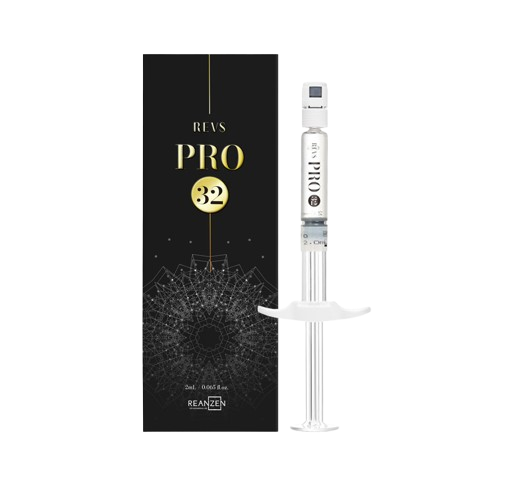
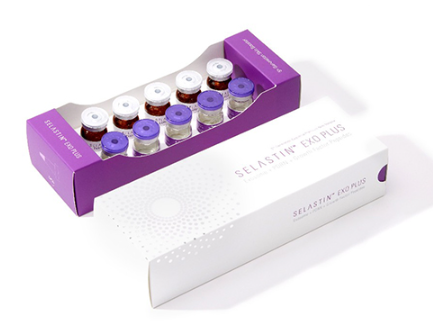
If you want the surrounding context rather than the verification procedure, our explainer on what mesotherapy is and what it is not covers the technique itself, and mesotherapy versus skin boosters separates the technique from the product class it is most often confused with. The preparations this guide applies to sit within the mesotherapy range, alongside products such as Revs PRO 32, SELASTIN EXO PLUS and Atlantis Hair.
Frequently asked questions
Frequently asked
How do I verify an authentic mesotherapy product?
Start by classifying it rather than verifying it. Mesotherapy names a delivery technique, not a product class, so the products used for it sit in different registers: some are licensed as drugs, some as medical devices, and some return nothing on the drug register under their common name. Once you know which, the procedure follows: query the right register on the right field, match the named licence holder and confirm the record is live, then check lot and expiry agreement across carton, unit and paperwork.
Are mesotherapy products regulated as drugs or as devices?
Both, depending on the product. Botulinum toxin, glutathione and vitamin preparations sit in the drug register, where supply classification and class codes are recorded. Fillers and tissue repair biomaterials sit in the device register, which has no supply classification field at all. A third group, including exosome preparations, returns no records on the drug register's ingredient field under that name. The word mesotherapy does not tell you which of these you have.
Why can I not find my mesotherapy product on the Korean register?
There are several possible reasons and they are not equivalent. It may be a device rather than a drug, so it is in a different register. It may be licensed under an ingredient name different from the marketing name. It may be regulated as a cosmetic. Or the query itself may have failed, since the ingredient index is case sensitive and a product name search can return fewer records than an ingredient sweep. Absence from a search is not the same as absence from regulation, and it should not be read as either a red flag or a reassurance on its own.
Is a mesotherapy cocktail a licensed product?
A mixture assembled by a seller is not a licensed product, whatever its components were individually, and there is no register record to verify it against. Buying licensed components is a different transaction from buying someone's pre-mixed preparation, and only the former can be checked against a register record.
What is the single most useful check?
Lot and expiry agreement across the carton, the individual unit and the accompanying paperwork. It applies to every bucket regardless of register, it requires no database access, and disagreement between any two of the three is difficult to produce by accident.
Disclaimer. This article is general educational information, current as of its publication date, and is not legal, medical or regulatory advice. Register contents change: the figures here were swept on a single date and records are granted and withdrawn continuously. Whether a specific product may be imported or used, and by whom, is determined by the relevant authorities and depends on approval status, classification and professional licensure in your own market. Confirming eligibility is the buyer's responsibility and, for prescription categories, runs through the appropriate licensed professional.
Sources & references
- Ministry of Food and Drug Safety (MFDS), open data registers, swept on 10 August 2026. Drug product approval register queried on the active ingredient field for "Clostridium Botulinum Toxin Type A" (58 records; 57 live; class code toxins and toxoids on all 57; prescription-only supply classification on all 57; export naming on 24; oldest live record 13 July 1999) and for "Exosome" in three capitalisations (zero records in each). Medical device approval register queried on the product category for tissue repair biomaterial (609 records; 458 live). Supply classification, class code, licence route, holder and grant date fields were read from the licence records themselves. data.go.kr
- KSTATION, Editorial & Sourcing Policy (official-channel sourcing and traceable provenance). kstations.com/pages/editorial-policy
The reason this guide leads with classification rather than with a checklist is that the classification step is the one buyers skip, and skipping it makes every subsequent check either irrelevant or misleading. For a category assembled around a technique rather than a product type, knowing which register holds your product is most of the work. What an accountable channel should be able to tell you is which bucket a given product is in, who holds its licence, and what its lot and provenance are. Whether that product is appropriate or permitted for your situation remains a matter for a qualified professional and your own authority.