
Skin Boosters
Skin Boosters
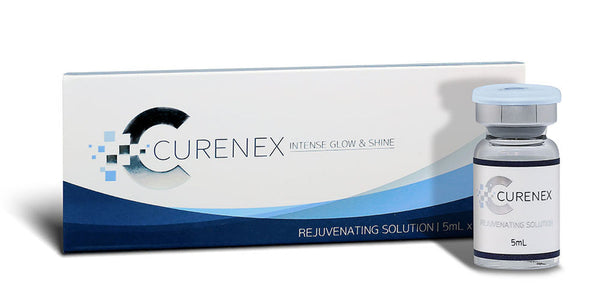
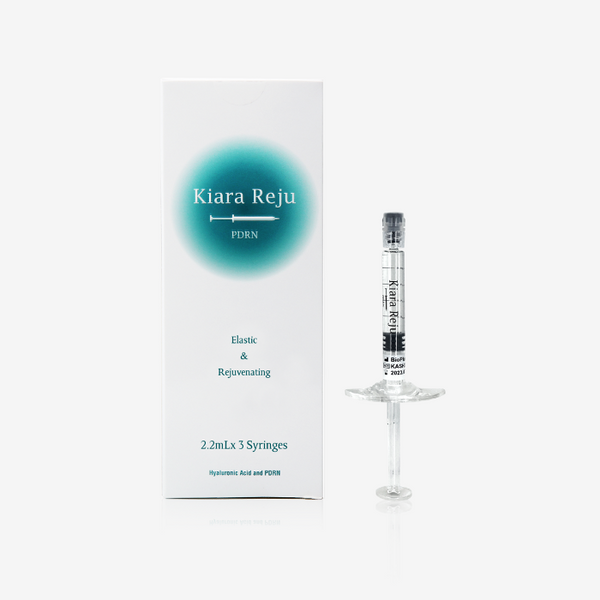
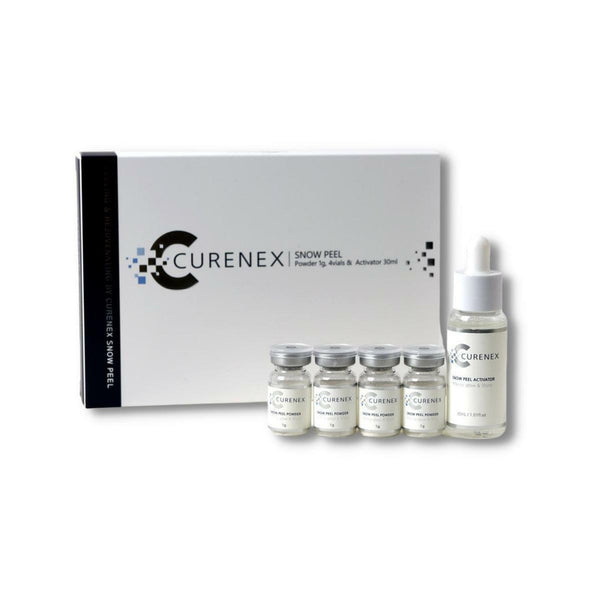
Skin boosters are injectable products positioned for skin quality rather than volume, defined by their active such as hyaluronic acid, PDRN, PN, exosomes, or growth factors; the Korean range includes lines such as CURENEX, Hyaron, Rejubeau, and KIARA.
Skin boosters are one of the most-searched categories in injectable aesthetics, and the useful first distinction is that a skin booster is defined by what is in it, not by adding volume. This page collects what a skin booster is, the actives that define the category, how to choose one, and how to verify what you are buying.
What a skin booster is
A skin booster is an injectable product positioned for skin quality, such as hydration and texture, rather than for adding structural volume the way a dermal filler does or acting on muscle the way a botulinum toxin does. The category is defined by its active ingredient, and the same kind of delivery can carry very different molecules. Because these are injectable products for administration by trained professionals, this page describes the category and how to source it; it does not describe how to use it or what results to expect, which are clinical questions.
The actives that define a skin booster
Reading a skin booster means reading its active, because that is what a specific product actually is. Each active is documented in its own guide, and a skin booster is built on one or more of them:
- Hyaluronic acid. The water-binding polysaccharide behind most hydration-focused boosters.
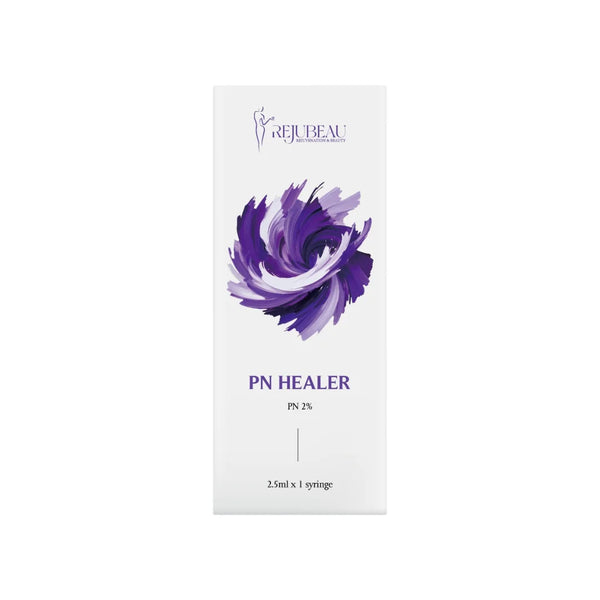
- PDRN and PN. Salmon-derived DNA-fragment polymers used across regenerative boosters.
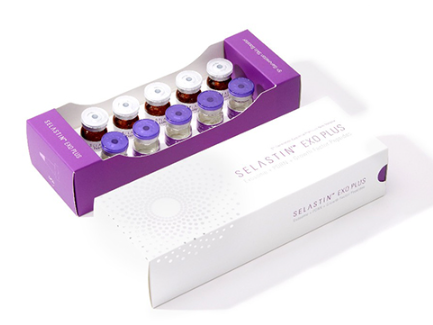
- Exosomes. Cell-derived vesicles that carry signaling cargo.
- Growth factors. Defined signaling proteins such as EGF.
- Vitamins and antioxidants. Nutrient blends positioned for skin conditioning.
How the category lines up
The neutral way to place skin boosters side by side is by active, not by claimed effect. The table maps each active to what it is and where to read more.
| Active | What it is | Guide |
|---|---|---|
| Hyaluronic acid (HA) | A water-binding polysaccharide | Hyaluronic Acid |
| PDRN / PN | Salmon-derived DNA-fragment polymers | PDRN |
| Exosomes | Cell-derived signaling vesicles | Exosomes |
| Growth factors | Defined signaling proteins | EGF |
The full stocked range sits under the skin boosters and ampoules collection.
Choosing and delivering a skin booster
Two questions sit next to the active. The first is choice: which booster suits a given concern is a clinical decision, and our guide on choosing a skin booster by concern, not by name lays out the neutral way to think about it. The second is delivery: skin boosters are frequently delivered by mesotherapy, the microinjection technique, so the two categories overlap in practice while describing different things, one a product and one a method.
Regulatory status by market
Status differs by country and by product, and by active. Korean skin boosters are marketed under the Ministry of Food and Drug Safety (MFDS) in South Korea, with the classification depending on the formulation. In the United States, many Korean skin boosters are not FDA-approved for aesthetic use, and status varies from one product to another, so confirm the specific product and market rather than assuming a shared status.
How to verify an authentic skin booster
Because a booster's value depends on it being the genuine, correctly handled product, verification runs through a chain of checkable details: an intact tamper-evident seal, a QR or DataMatrix code that resolves to an official manufacturer page, a lot number and expiry that match between the syringe or vial and the carton, MFDS and KGMP regulatory marks, storage and handling per the labeled specification, and a documented purchase from an authorized channel. For the full buyer-facing method, see how to verify an authentic Korean skin booster and, for injectables broadly, how to distinguish authentic Korean injectables from counterfeits and our Editorial & Sourcing Policy.
Common questions
What is the difference between a skin booster and a filler?
A dermal filler adds structural volume, while a skin booster is positioned for skin quality such as hydration and texture and is defined by its active ingredient rather than by volume. They are different categories, though both are injectables. Which suits a given case is a clinical question.
What is inside a skin booster?
It depends on the product. Common actives include hyaluronic acid, PDRN and PN, exosomes, growth factors, and vitamin blends. Reading a booster means checking which active it contains, at what stated content, and from which maker; each active has its own guide.
Is a skin booster the same as mesotherapy?
Not quite. A skin booster is a product, while mesotherapy is a microinjection technique often used to deliver one. Many boosters are delivered by mesotherapy, but the category also stands on its own, defined by its active.
How do I verify an authentic skin booster?
Check the whole chain: an intact seal, a QR or DataMatrix code that resolves to the manufacturer, a lot number and expiry that match between syringe or vial and carton, MFDS and KGMP regulatory marks, correct storage, and a documented purchase from an authorized channel. Untraceable origin or unusual pricing are reasons to stop.
Sources & references
- U.S. FDA, Is It a Cosmetic, a Drug, or Both? (Or Is It Soap?), structure/function vs. drug regulation. fda.gov
This page is general educational information, not medical advice, and describes the skin booster category rather than what any product will do for an individual. These are injectable products for administration by trained professionals; this page does not describe dosing, administration, or expected results. Regulatory status varies by country and changes over time.
Reading on Skin Boosters

REGENOVUE Aqua Shine vs Aqua Shine Plus: Same Dose, One Declared Difference
REGENOVUE Aqua Shine and Aqua Shine Plus arrive in boxes that are easy to confuse: three pre-filled syringes of 3mL each, hyaluronic...
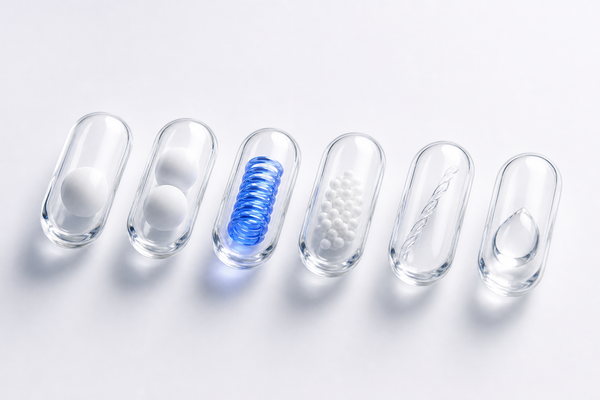
Korean Eye-Area Boosters, Compared: Six Products Under One Label, Five Different Formulas
Search for a Korean eye booster and you will find a tidy-sounding category: small syringes, eye in the name, positioned for the...

Eight Exosome Products, Four Ways of Saying How Much
Put two exosome cartons side by side. One declares 300 billion particles. The other declares 14 billion particles per millilitre. The first...

LAPUROON Aurora Super and Vivid: Where the Names Stop Being a Ladder
Two boxes sit next to each other on the same shelf, both labelled LAPUROON Aurora. One says Super and declares PDRN at...

Hyaron: What It Is and How to Source It Authentically
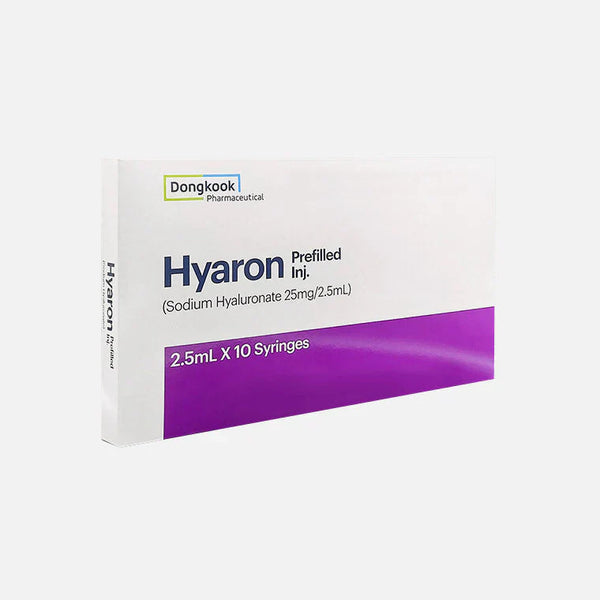
A box of Hyaron Prefilled declares three things without ambiguity: sodium hyaluronate, 25mg, 2.5mL. What the box does not settle is which...

When mg and mL Appear on the Same Box, and Why That Means Two Different Things
A skin booster box that reads 100mg Powder x 5 Vials + 6mL Solvent x 5 Vials contains ten containers. A box...

Reading CURENEX: One Brand Name, Five Products That Share Almost Nothing
CURENEX arrives in most conversations as a single thing. People ask what CURENEX is, whether CURENEX works for their concern, how long...

Reading a Professional Peel: Which Ingredients the Register Can Show You
Two products on the same shelf can both be called a professional peel and have almost nothing in common. That is not...

Topical or Injectable? What a Korean Ampoule Actually Declares
Two vials arrive in the same box. Both are 5 mL, both are clear glass with a flip-off cap, both were sold...

PN vs PDRN for Under Eyes: Which One Actually Fits?
Ask which of PN and PDRN is better for the under-eye area and you will get confident answers pointing both ways, which...

Reading a Copper Peptide (GHK-Cu) Booster: What the Name Says, and What the Register Does Not
A copper peptide booster label gives you two words and both of them are misleading if you read them the way the...

PDRN: What the Korean Register Actually Licenses It As
PDRN is sold as one thing. A single active with a single story, offered in vials, syringes, creams and eye drops as...
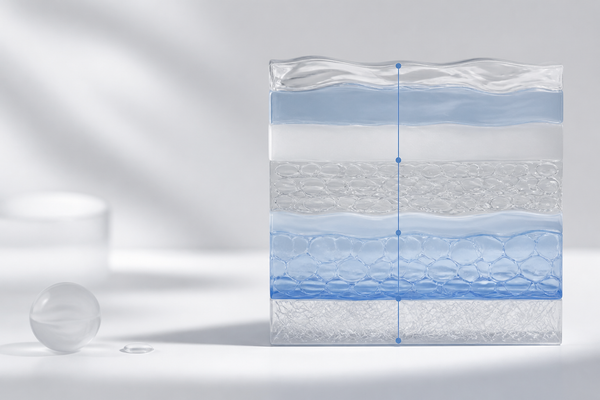
Injection Depth: Why the Same Booster Behaves Differently Intradermal, Subdermal, and In Between
The same injectable behaves differently depending on the skin layer it lands in. A sourced look at the dermal planes, why depth...
Skin Tightening and Firming, by Mechanism: What Stimulates Collagen, and What Only Hydrates
Firming is not one thing, and the injectables sold for it do not work the same way. A sourced map of what...
Preparing for a Skin Booster: The Week Before, and the One Thing in Your Hands
Most pre-procedure advice belongs to your practitioner, and their instructions override everything. But one piece of the preparation is genuinely yours: knowing...
The Skin Booster Family, by Active: PDRN, Growth Factors, Exosomes, HA, and Antioxidants
Walk through a Korean skin booster range and the products do not sort themselves by name or by price. They sort by...
Mesotherapy vs Skin Boosters: A Technique and a Product, Untangled
Mesotherapy and skin boosters are constantly named together and mean different things: one is a delivery technique, the other a product defined...

Reading an EGF Product: Which Protein, What Concentration, Which Maker
A growth factor is a single defined protein, which means an EGF product can state exactly what is in it. A reading...
Cross-Linked vs Uncross-Linked HA: One Molecule, Two Jobs
Hyaluronic acid behaves as two different materials depending on one processing step. What cross-linking changes, and why an HA booster and an...

Reading an Exosome Product: Source, Characterization, and Cold Chain
Two exosome vials can share a label and nothing else. A reading guide to the source cell line, characterization, and handling that...

Reading a PDRN Skin Booster: Molecular Weight, Purity, and Sourcing
Two vials can both say PDRN and still be different products. A reading guide to the numbers and provenance facts that separate...

Choosing a Skin Booster by Concern, Not by Name
Hydration, brightening, firmness, or recovery: how to match a Korean skin booster to your concern by ingredient family rather than brand name.
How to Verify an Authentic Korean Skin Booster Before You Buy
A practical B2B guide to verifying an authentic Korean skin booster: what to check on the box, vial, and lot, how to...

Skin Booster Before and Aftercare: Bruising, Alcohol, and the Days Around a Session
Most pre-care for a skin booster comes down to one variable: bruising. Here is what the week before actually does, the blood-thinner...
Understanding EGF: What Epidermal Growth Factor Means in a Skin Booster
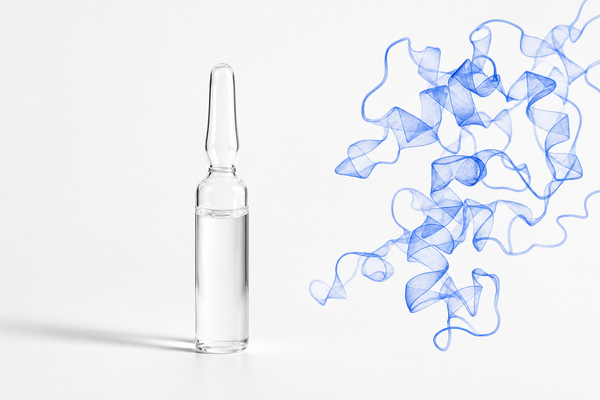
EGF (epidermal growth factor) is a renewal-signaling protein in the regenerative category of skin boosters. A sourcing-side look at what it is,...

Part 15: The Ultimate Guide to Hyaluronic Acid – From Daily Cosmetics to Advanced Fillers
Hyaluronic acid is the rare ingredient that shows up in a five-dollar drugstore serum and in a clinic-grade dermal filler, and the...

Part 13: The Future of Skin Regeneration – Understanding Exosomes in Medical Aesthetics
Part 13 of this series turns to the ingredient that has reframed the medical aesthetics conversation around regeneration: the exosome. Where hyaluronic...

Part 11: Surviving the Seasonal Shift – A Clinical Guide to Spring Transition Skincare
The move from winter into spring is one of the most volatile stretches of the year for skin. Cold mornings give way...

Part 8: Protecting Your Investment – The Ultimate Storage Guide for Botox, Fillers, and Skin Boosters
A skin booster, an exosome ampoule, or a hyaluronic acid filler is a real investment, and like any investment it holds its...

Part 7: PN vs. PDRN - Unlocking the Secrets of Salmon DNA Skin Boosters
If you have read anything about Korean medical aesthetics, you have met the "salmon injection," and you have almost certainly met its...

Part 1: Skin Boosters – The Ultimate Choice for Your Skin
Skin that reads as dry, dull, or tired is often not a surface problem at all. It is a question of how...
Skin Boosters in the catalog
Officially sourced. Curated for North America.